
The International Islamic University Malaysia has established a formal inclusion framework through the IIUM Disability Inclusion Policy, which was endorsed in January 2018 and officially launched in November 2018. While a comprehensive Equality, Diversity, and Inclusion (EDI) policy covering all social categories is not explicitly outlined, this policy reflects the university’s commitment to eliminating discrimination and promoting equal opportunities within its community.
The policy places strong emphasis on disability inclusion, covering students and staff with physical, mental, intellectual, and sensory impairments that may affect their full participation in academic and social life. Recognised categories include hearing, speech, and visual impairments, physical and learning disabilities, mental or psychological conditions, as well as multiple disabilities.
To support inclusivity, IIUM provides reasonable accommodations such as flexible academic arrangements, extended study durations where necessary, and accessible residential facilities. These measures aim to ensure equitable access to education and a supportive campus environment for all.
In addition, the university’s inclusion efforts are guided by Islamic values, particularly the principles of al-‘adl wa al-ihsan (justice and benevolence), and aligned with the objectives of Maqasid al-Shari‘ah, reinforcing a holistic approach to community wellbeing.
Overall, IIUM’s inclusion framework is primarily centred on disability, in line with national and international standards such as the Malaysian Persons with Disabilities Act 2008 and the United Nations Convention on the Rights of Persons with Disabilities (UNCRPD).
The International Islamic University Malaysia provides comprehensive support for persons with disabilities through an integrated framework of services, facilities, and institutional policies.
A key component of this support system is the Disability Services Unit (DSU), established under the Office of the Deputy Rector (Student Development and Community Engagement). The DSU delivers essential services, including academic accommodations, accessibility assistance, mobility support, and mental health services, while ensuring the effective implementation of the IIUM Disability Inclusion Policy.
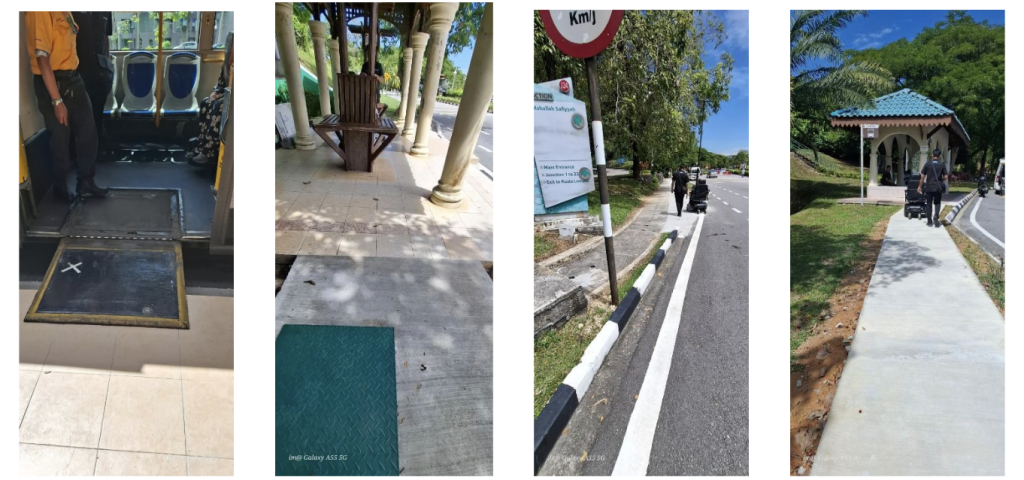
In terms of physical accessibility, the university has developed a more inclusive campus environment through the provision of ramps, lifts, tactile paving, and accessible facilities across key locations. Continuous improvements are also undertaken, including infrastructure upgrades such as enhanced accessibility at selected Mahallah bus stops to better accommodate wheelchair users.
Program: Completion Upgrading Bus Stop Project
Date: 11 June 2025
IIUM has enhanced campus accessibility through the upgrading of bus stops at Mahallah Uthman and Mahallah Safiyyah. This initiative improves access to transportation services, particularly for wheelchair users, by providing safer and more inclusive boarding facilities.
The project was funded by Perbadanan Wakaf Selangor and implemented with oversight from the university’s Development Division. It reflects IIUM’s ongoing commitment to improving accessibility infrastructure, with plans to extend similar enhancements to other areas of the campus in the future, subject to funding availability.
Beyond facilities, IIUM promotes inclusive participation through targeted support initiatives. The IIUM Ibn Ummi Maktum Club (I-MaC) plays an important role in supporting students with disabilities, working closely with the DSU to address student needs. Additional initiatives, such as peer support programmes and Disability Equality Training (DETAIL), contribute to raising awareness and fostering an inclusive campus culture.
Program: DETAIL Program for Universiti Kuala Lumpur (UniKL) Management
Date: 6 February 2026
Venue: UniKL BMI Sg. Pusu
Organiser: DSU, UniKL
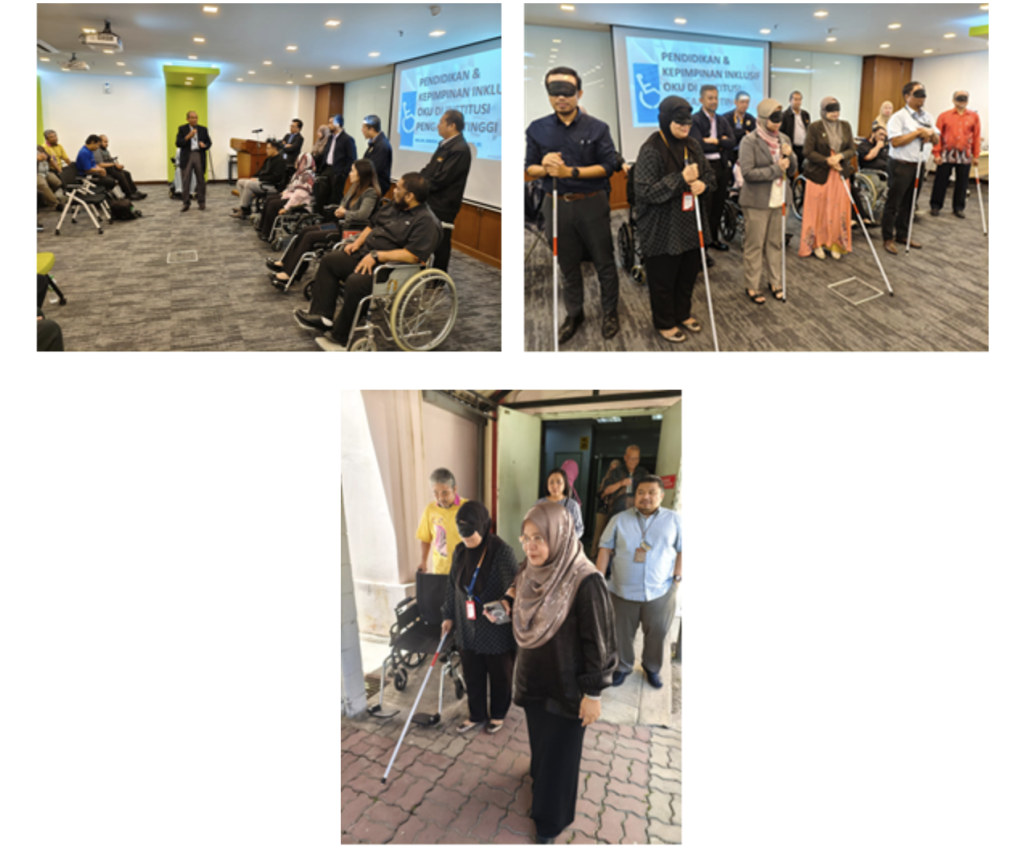
Disability Services Unit (DSU), actively promotes disability inclusion beyond the campus through initiatives such as the Disability Equality Training and Inclusive Leadership (DETAIL) programme. The training was conducted for Universiti Kuala Lumpur management to enhance awareness and understanding of inclusive practices in higher education.
The programme focused on inclusive leadership and accessibility strategies, combining expert insights with real-life experiences. It featured contributions from academic staff and practitioners, including perspectives on student support services and navigating academia with disabilities.
Participants were also engaged in experiential learning activities designed to foster empathy and deepen understanding of the challenges faced by persons with disabilities. Overall, the initiative reflects IIUM’s commitment to knowledge sharing, capacity building, and advancing inclusive education practices across institutions.
The university also provides on-campus accommodation (Mahallahs) with dedicated provisions for students with disabilities. These facilities are continuously improved to enhance accessibility and ensure a supportive living environment.
This holistic approach is guided by the IIUM Disability Inclusion Policy, which outlines provisions for reasonable adjustments and inclusive practices. Implementation is further strengthened through funding support, such as the PDK Special Grant from the Ministry of Higher Education, and collaborations with external organisations including Perbadanan Wakaf Selangor (PWS). The university also conducts regular engagement sessions across Kulliyyahs to promote inclusive teaching and learning practices.
