
The International Islamic University Malaysia offers a range of sustainability-related academic programmes accredited by the Malaysian Qualifications Agency, ensuring both national and international recognition. These programmes are aligned with global academic standards and are designed to address current environmental and societal challenges.
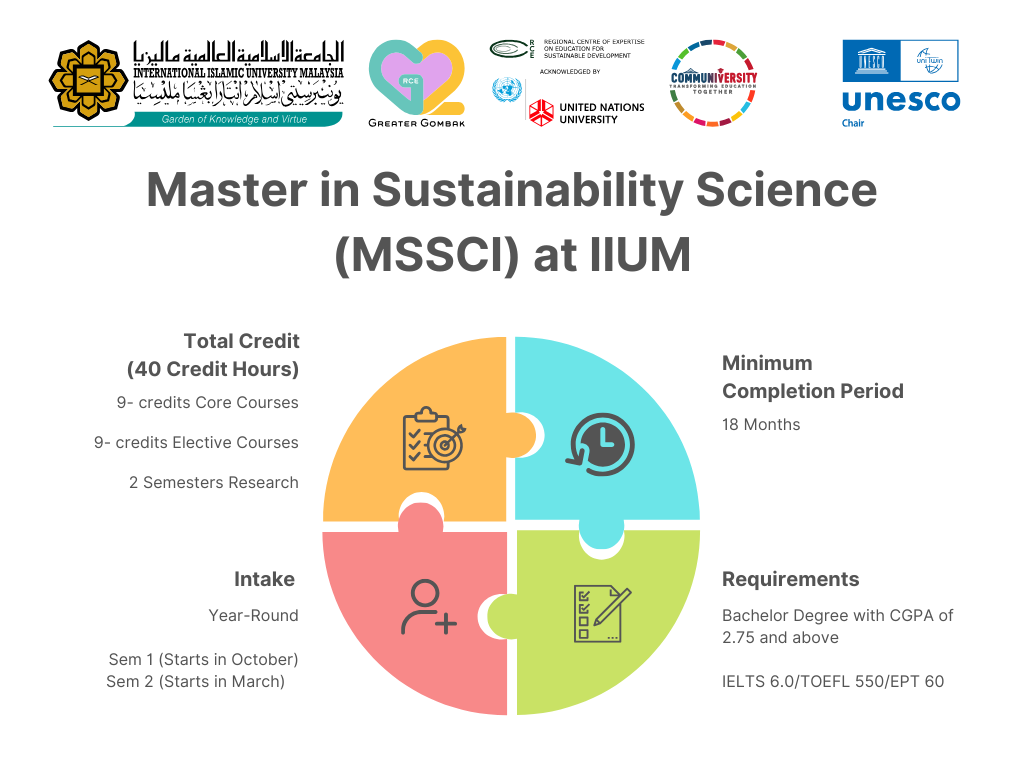
Key offerings include the Master in Sustainability Science (MSSCI) by the Sejahtera Centre for Sustainability and Humanity, which adopts a human-centric and applied approach to sustainability.
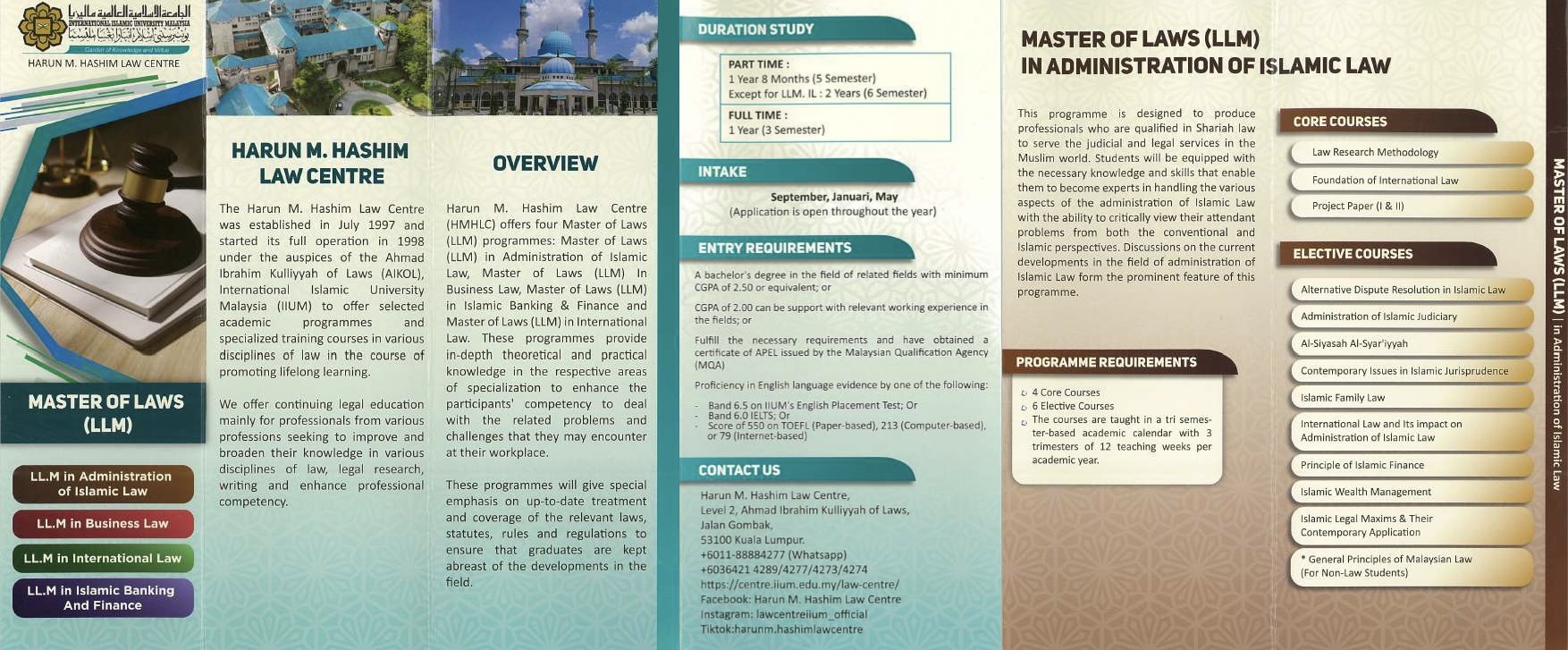
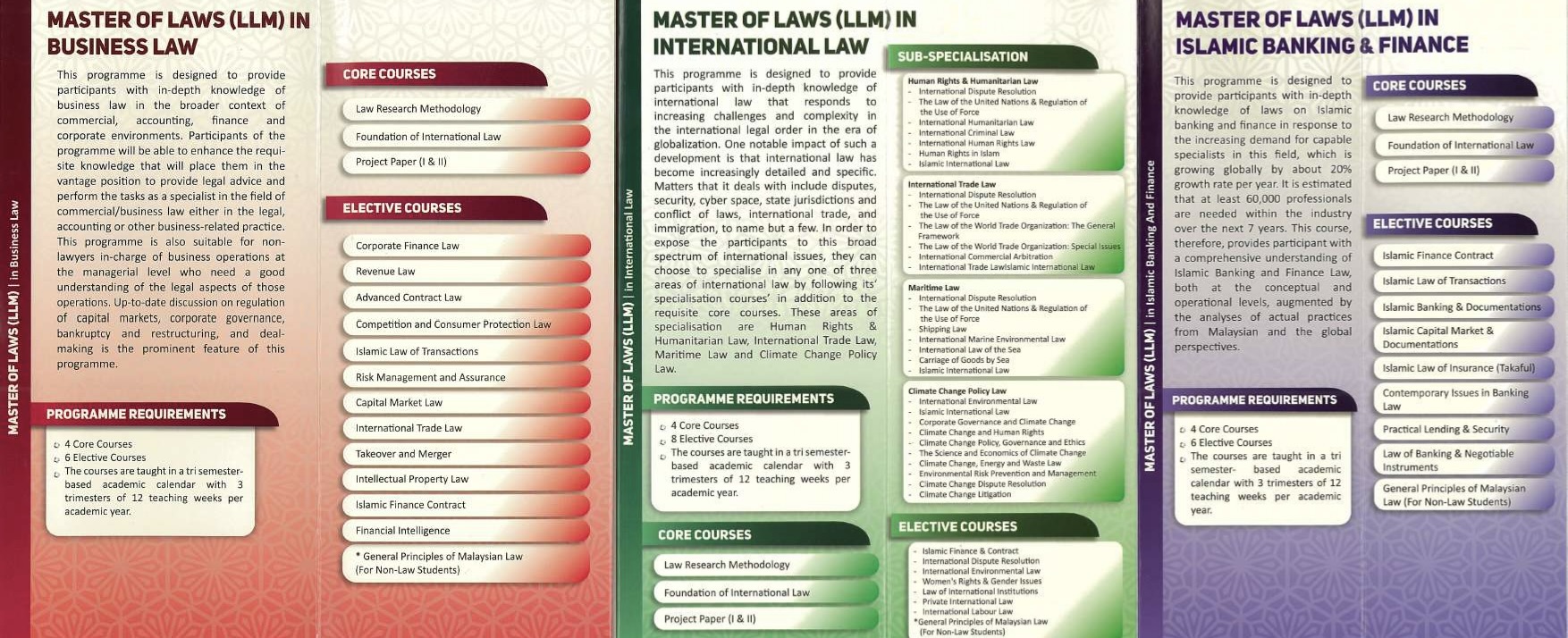
The Ahmad Ibrahim Kulliyyah of Laws offers a Master of Laws (LLM) in International Law, with the option to specialise in Climate Change Policy Law. This pathway equips students with the legal knowledge and analytical skills required to address global environmental challenges and contribute to climate governance.
The Planetary Health Action Research Centre IIUM offers specialised Master’s and PhD programmes in Planetary Health, focusing on the interconnectedness between human health and the environment. These programmes aim to develop experts capable of addressing complex sustainability and public health challenges.
PLANETIIUM actively contributes to the teaching and learning ecosystem at the International Islamic University Malaysia through curriculum development, teaching, and academic supervision. The institute integrates current research findings and sustainability-related content into academic programmes to ensure relevance with global sustainability agendas.
Its members serve as lecturers, guest speakers, and supervisors, providing interdisciplinary insights and real-world perspectives. In addition, the institute supports postgraduate research and offers opportunities for undergraduate training, including research attachments and industrial placements in areas such as environmental sustainability, toxicology, and planetary health.
Welcome to the Master in Sustainability Science Programme At the International Islamic University Malaysia (IIUM), we are proud to offer a cutting-edge Master in Sustainability Science programme designed to address the critical sustainability challenges of our time. This programme stands out with its unique human-centric approach, integrating theoretical knowledge with practical applications to empower students to create impactful, sustainable solutions that enhance human well-being and social equity.
Why Choose Our Programme?
Focus on Current Issues: Our curriculum is designed to address contemporary challenges, including Environmental, Social, and Governance (ESG) concerns, preparing graduates to lead in the rapidly evolving field of sustainability.
Experienced Faculty Members: Learn from experienced professionals with knowledge in sustainability, combining real-world experience with academic excellence.
Transformative Learning Environment: An inclusive experiential learning through a real-world living lab, connecting major stakeholders of sustainability through communiversity approach.
Global Perspective: Gain a global outlook through international collaborations and exposure.
Programme Structure:
Our Master in Sustainability Science is a mixed-mode programme combining coursework and research. It includes core courses such as:
Sustainability Science: Concepts, Principles, and Policy
Islam and Sustainable Development
Research Methodology for Sustainability Science
Additionally, students can choose from a wide range of elective courses covering topics such as:
Social Finance
Urban Ecosystem and Environmental Management
Sustainable Production & Consumption
Islamic Economics Thought
Agriculture and Environment
Comparative Environmental Law
Social and Community Planning
Land Use Planning Law and Practice
Food and Nutrient Security
Precision Agriculture
The programme culminates in a capstone research project that addresses a real-world sustainability challenge, providing practical experience and the opportunity to apply what you’ve learned.
Career Opportunities:
Graduates of the Master in Sustainability Science programme are well-equipped to pursue a variety of careers, including:
Sustainability Consultant
Environmental Policy Analyst
Corporate Social Responsibility (CSR) Manager
Sustainable Development Officer
Programme Learning Outcome
Demonstrate mastery of knowledge of sustainability science with the ability to apply it in various and interconnected issues with a local context specific for the benefit of the ummah.*
Demonstrate good competency in solving wicked problems of sustainability and making decisions by integrating the knowledge, sustainability science principle and approaches.*
Facilitate and advise various agencies that include governmental, non-governmental organisations, public and/or private bodies in the best interest of the community and responsibility towards sustainability state of mind.
Uphold and demonstrate high ethical, professional and sustainable standards and practices when dealing with complex sustainability issues.
Demonstrate intellectual leadership qualities through engagement with peers, stakeholders and community by considering local values and norms.
Evaluate problems critically and use the sustainability science method to solve systemic local problems in a transdisciplinary approach involving diverse stakeholders and community.
Manage relevant information gathered for lifelong learning in various sustainability science areas with state-of-the-art technology.
Practice basic managerial, advocacy and entrepreneurial skills in addressing challenges and issues related to sustainable development.
Integrate Islamic principles in solving issues related with sustainability and its practices and demonstrate Islamic values and norms in professional conduct.
Demonstrate knowledge integration of various disciplines into a meaningful framework with the ability to manage complex systems.
Collaborate with experts from various fields through an inter and transdisciplinary research, to undertake responsible research in policy formulation and convey sustainable ideas.
General Academic Requirements
1. Candidates will require a relevant Bachelor’s degree (honours) from the IIUM or any other accredited institution of higher learning; or 2. Any other certificate that is recognized as equivalent to a Bachelor’s degree (honours) or other relevant professional qualifications and experiences that are recognized by the Senate of the University. 3. Fulfil the necessary requirements and have obtained a certificate of APEL A issued by the Malaysian Qualification Agency (MQA).
Specific Requirements
1. Candidates must have obtained a CGPA of 2.75 and above. 2. Candidates with a CGPA of 2.50 may be accepted subject to rigorous internal assessments such as:
interview;
written exam,
pre-requisites.
3. Candidates with a CGPA of less than 2.50 may be accepted subject to a minimum of 5 years working experience in an accredited institution.
Research Proposal
Not required
General Admission Requirements for Applicants with Working Experience
For applicants with working experience, the number of years of their working experience will be considered in their application through a point system. The method of calculation and convergence is 1 year of experience which is equivalent to 0.05 points and 10 years of experience which is equivalent to 0.5 points.
Pass an interview by a panel from the respective Centre of Studies (if necessary).
1. Applicants are required to provide evidence of having attained the minimum required score for:
the Test of English as a Foreign Language (TOEFL);
the International English Language Testing System (IELTS); or
the IIUM administered English Placement Test (EPT).
2. The minimum required score for each of the above tests is listed in the table below:
MINIMUM TOEFL SCORE (ACADEMIC) | MINIMUM IELTS SCORE (ACADEMIC) | MINIMUM SCORE (EPT)
|
Paper based :550 Internet based :79 | 6.0
| 6.0
|
3. Applicants may be exempted from rule a) if they have undertaken a regular programme of study and have graduated from universities that use English as the medium of instruction in English–speaking countries or who have graduated from the IIUM.
Sem 1 (9 Credit Hour) | Sem 2 (Choose three electives- 9 Credit Hours) | Sem 3 & Sem 4 (22 Credit Hour)
|
SCSH 7301: Sustainability Science: Concept, Principle & Policy SCSH 7302: Islam and Sustainable Development SCSH 7303: Research Methodology for Sustainability Science | SCSH 7333: Social Finance SCSH 7324: Urban Ecosystem and Environmental Management SCSH 7332: Sustainable Production & Consumption SCSH 7331: Islamic Economic Thoughts SCSH 7311: Agriculture and Environment SCSH 7321: Comparative Environmental Law SCSH 7323: Social and Community Planning SCSH 7322: Land Use Planning Law and Practice SCSH 7312: Food and Nutrient Security SCSH 7313: Precision Agriculture |
Refer Here
Intake : Year-Round Please visit: https://eadmission.iium.edu.my
