NURTURING UMMATIC EXCELLENCE THROUGH SDG 7 : AFFORDABLE AND CLEAN ENERGY -ori
NURTURING UMMATIC EXCELLENCE THROUGH SDG 7 : AFFORDABLE AND CLEAN ENERGY
The International Islamic University Malaysia (IIUM) is dedicated to transforming its campuses into models of energy efficiency and sustainability. Through the implementation of advanced technologies and comprehensive energy-saving measures, IIUM has upgraded its facilities with high-efficiency chillers, power quality devices, and LED lighting systems across the Gombak and Kuantan campuses. The University also integrates renewable energy solutions, including solar lighting installations at the Pusat Pemulihan Dalam Komuniti (PDK), while promoting responsible energy practices through initiatives such as motion-sensor lighting and electricity-saving campaigns. These efforts have significantly reduced energy consumption, operational costs, and the University’s overall carbon footprint. By aligning with Malaysia’s Renewable Energy Roadmap and the global pursuit of SDG 7 (Affordable and Clean Energy), IIUM continues to strengthen its leadership in fostering eco-conscious, future-ready educational environments guided by the principles of Sejahtera and Islamic values.
UNIVERSITY MEASURES TOWARDS AFFORDABLE AND CLEAN ENERGY
ENERGY-EFFICIENT RENOVATION AND BUILDING
The IIUM has implemented numerous energy efficiency/savings measures at its campuses and have managed to result in savings with an average of up to 22%. The university strived to be as energy efficient as possible and together with its collaborators have managed to improve its savings by replacing the chiller plant with highly efficient chillers, pump and cooling towers with variable speed drives. IIUM also worked on other areas such as the main incoming building supply, small/ split unit AC systems, LED lighting and also a chiller optimization system (ICEE).
The following are the key energy conservation initiatives carried out by the appointed collaborators at IIUM campuses:
- Energy Management System (EMS)
- Monitoring and recording all parameters of power consumption for each substation (buildings) in IIUM campuses.
- Cloud data management system.
- Main Parameter: kWh, kW, PF and Current (Amp).
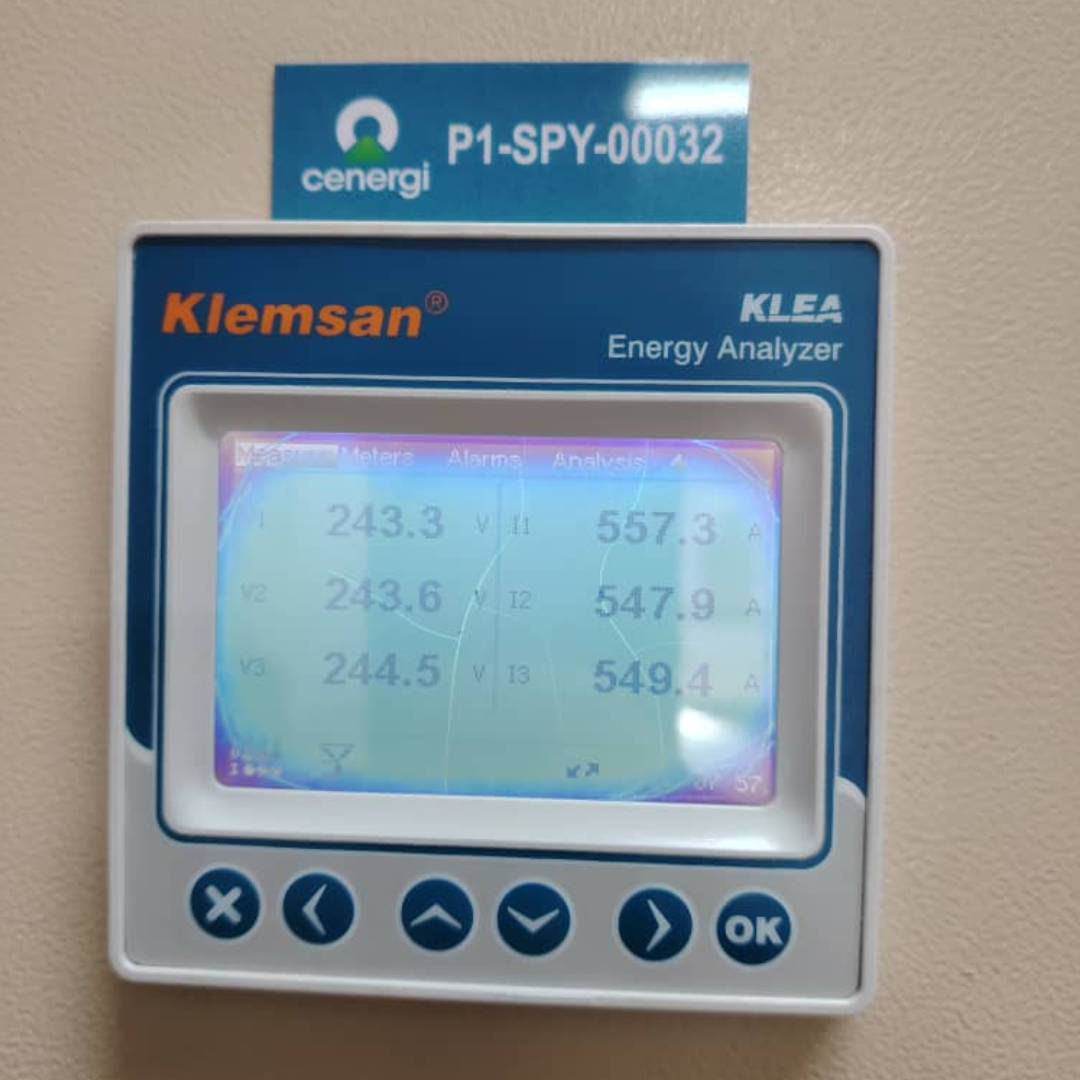
Energy Management System (EMS) meter installed at all buildings
- LED lighting replacement
- LED products are considered one of the cost-effective Energy Saving Measures for many applications.
- Provides better performance and lowers energy usage by more than half compared to traditional lighting.
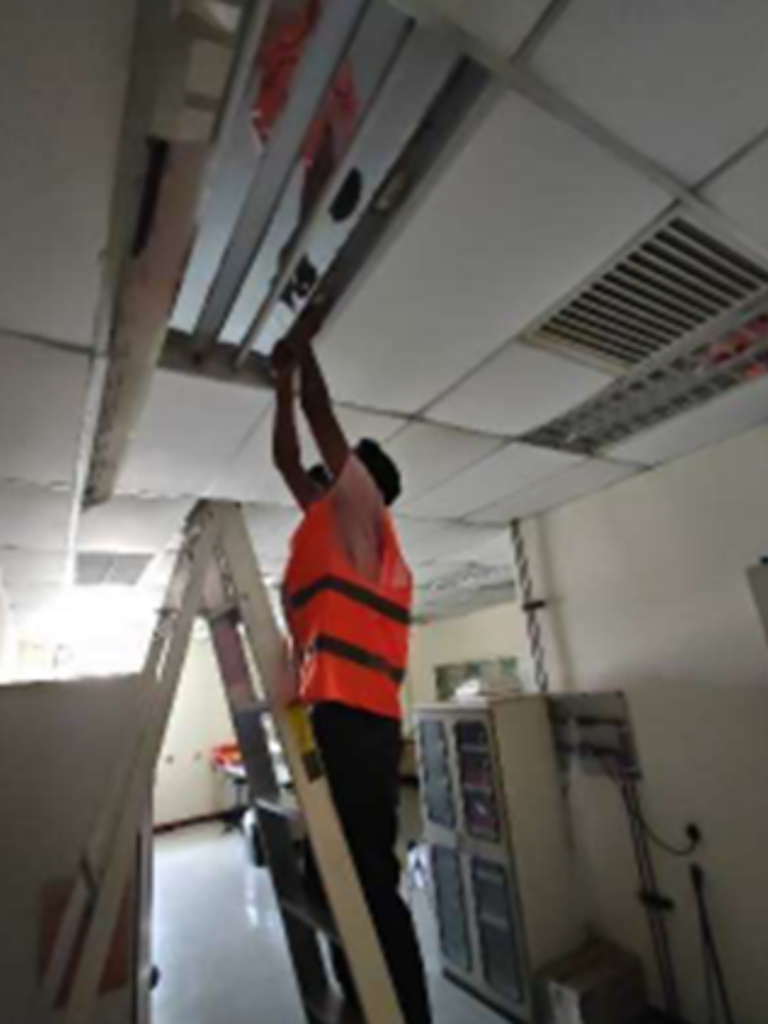
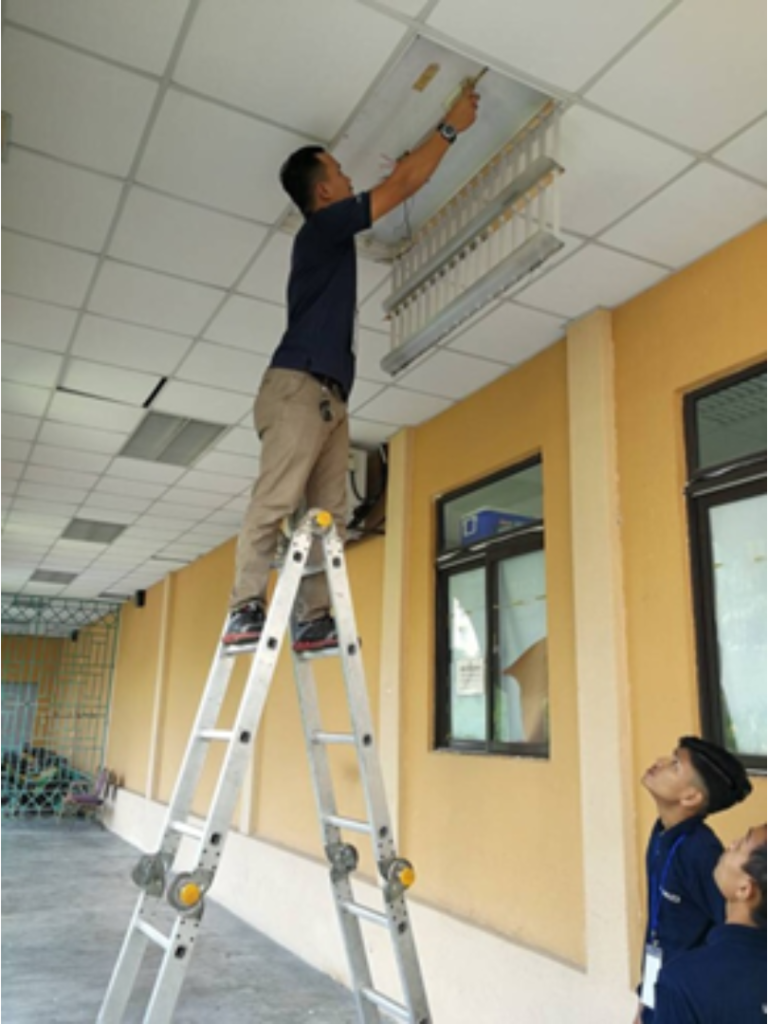
- More than 90,000 units of T8 LED Lights at Gombak and Kuantan campuses were retrofitted which resulted in almost 3% – 5% improvement from the total energy bills.
- Installation of Power Quality Device
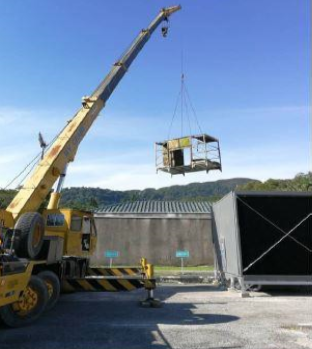
- Transformers used to deliver power at a reduced voltage from the mains supply, to avoid wastage.
- Improves the energy load factors on unbalanced, harmonic and reactive power.
- Intelligent Control for Small Air-Conditioning
- A device which optimizes the small air-conditioners running operation.
- Counters issue on percentage of compressor running
- Integrated with existing small air-conditioning.
- Intelligent Chiller Control
- Intelligent control of the chillers based on input of required cooling load for that particular building
- Optimized the existing Administration buildings chiller running consumption.
- The system consists of comprehensive field data measurement for chillers centralized air-conditioning system.
- Chiller Plant Retrofit
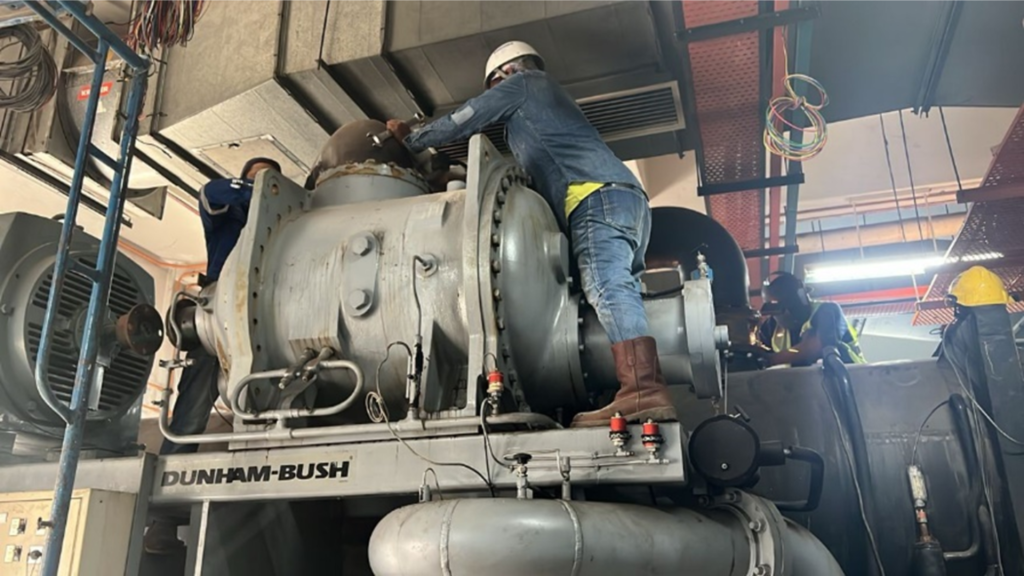
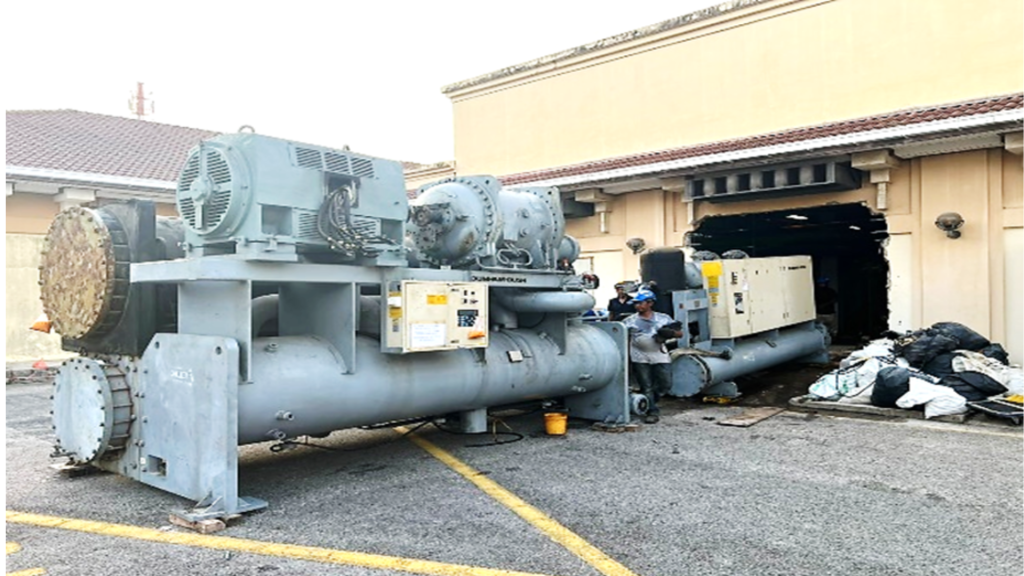
- Replacement of chillers that are more than 10 years old and have become inefficient.
- Retrofit scope covers chillers, motors, variable speed drives (VSD), pumps, cooling towers, sensors, transducers and BAS chiller systems.
- As a result, the retrofitted chiller plants now achieve an average efficiency of 0.80 kW/RT, representing an improvement of approximately 40%.
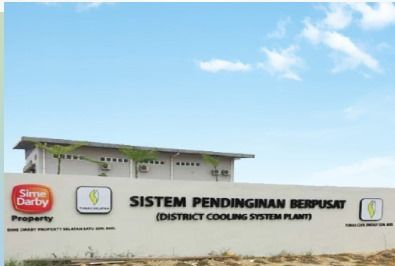
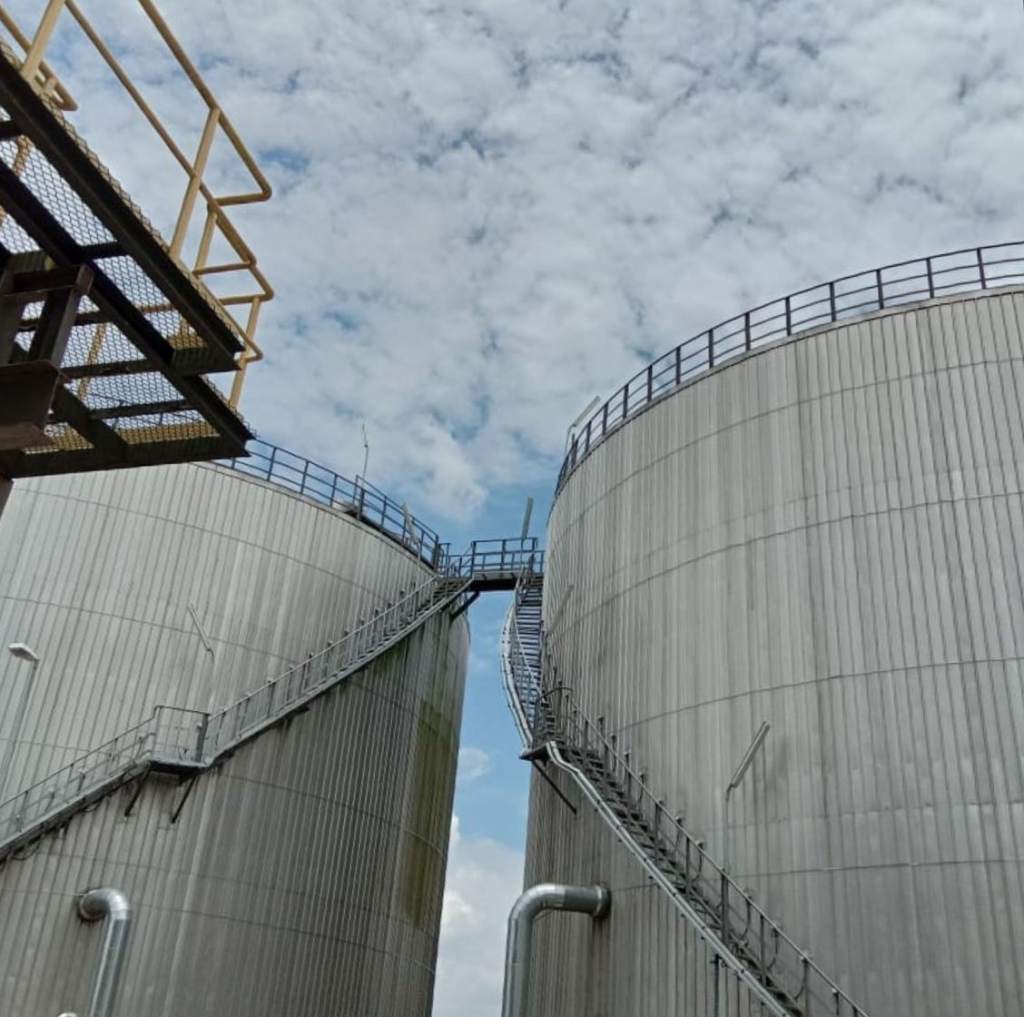
- District Cooling at Pusat Pendidikan Pagoh (Pagoh Education Hub)
- Pagoh District Cooling Plant is part of the planned infrastructure for the hub. The plant’s innovative cooling system efficiently distributes chilled water to various facilities within the Education Hub, which demonstrates the importance of sustainable engineering solutions.
- The operator of the district cooling system is a specialized energy services company that provides cooling energy as a service, and the University pays based on consumption.
These are other initiatives that have been launched in the IIUM to ensure there is sustainable impact not only on energy but the environment itself:
- Indoor Air Quality Audit (IAQ)
- The university from time to time engages relevant and authorized consultants to conduct IAQ surveys and measurements to comply with Malaysia Building Code of Practice (MS1525) for Indoor Air Quality and air-conditioned buildings. The university makes necessary rectification and preventive measures to improve the situation.
- Energy Saving Initiatives by IIUM Administrators
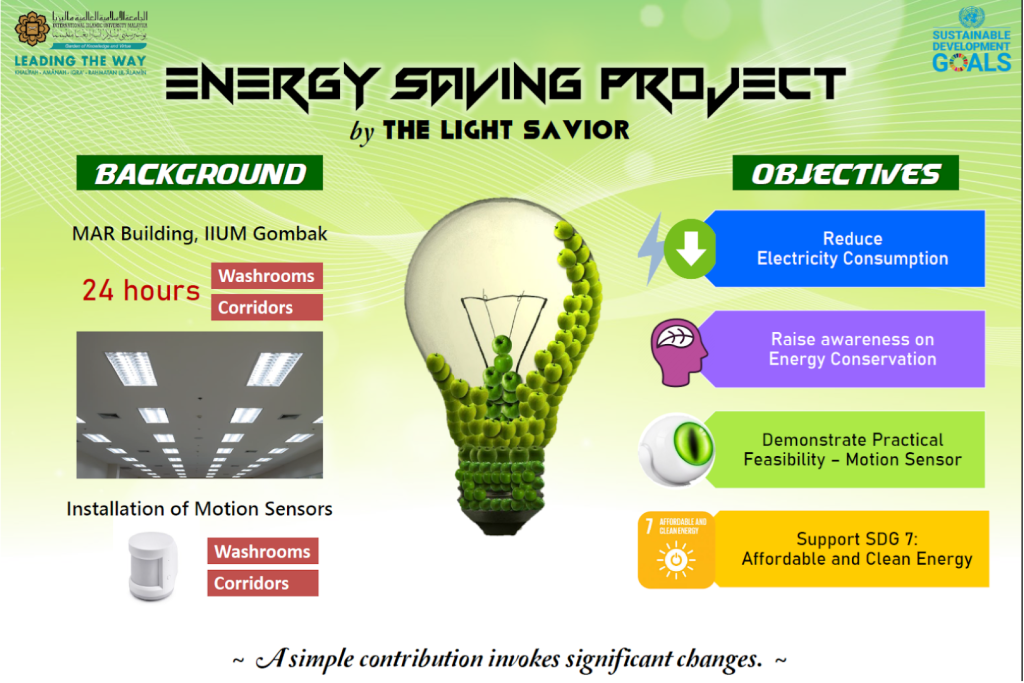
- Believing that there is a possibility for further cost-saving if certain measures are taken by the University, a special team was set up to embark on another Energy Saving Project (ESP) as part of the contribution from the IIUM administrators to support the IIUM sustainability initiatives.
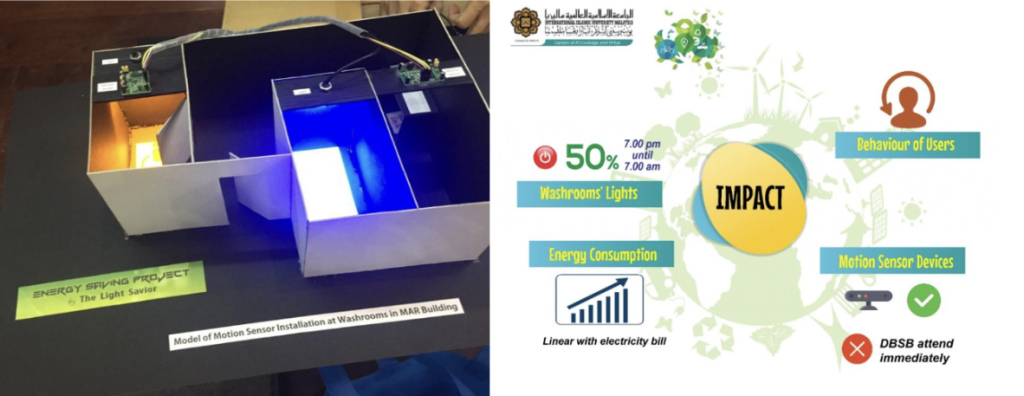
- This project proves that even a simple contribution would be significant enough to provide impact to the University in terms of cost-saving towards electricity bill and change of user behaviour on energy wastage.
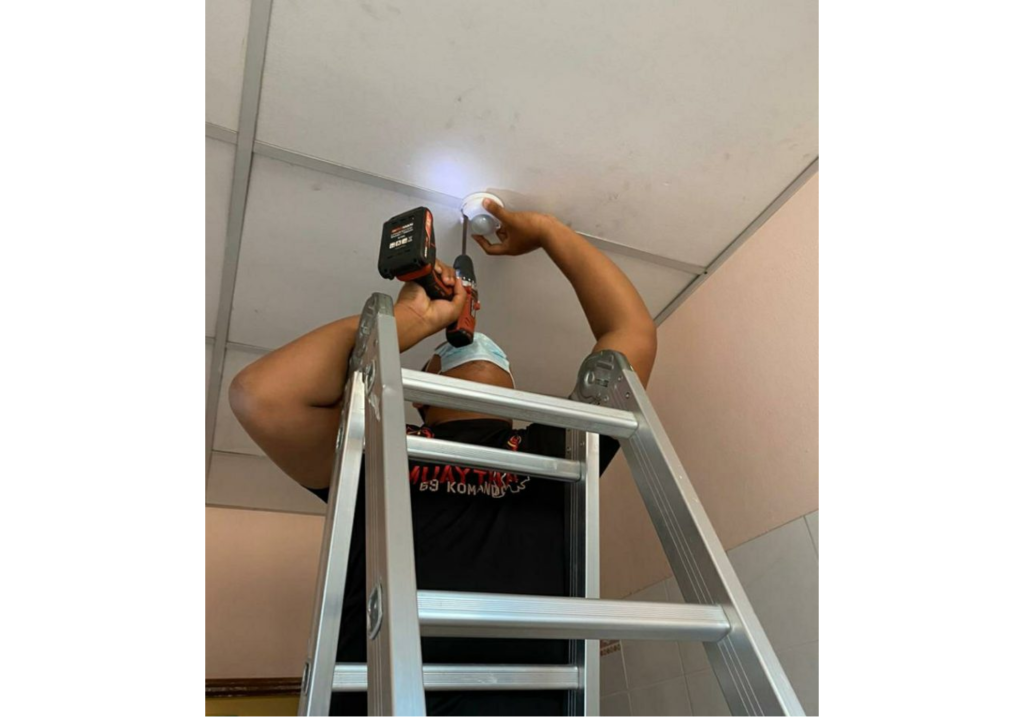
- It demonstrates the practical feasibility of simple electricity conservation measures through the installation of motion sensor devices at selected sites in the Muhammad-Abdul Rauf (MAR) Building.
- Green Computing Initiative
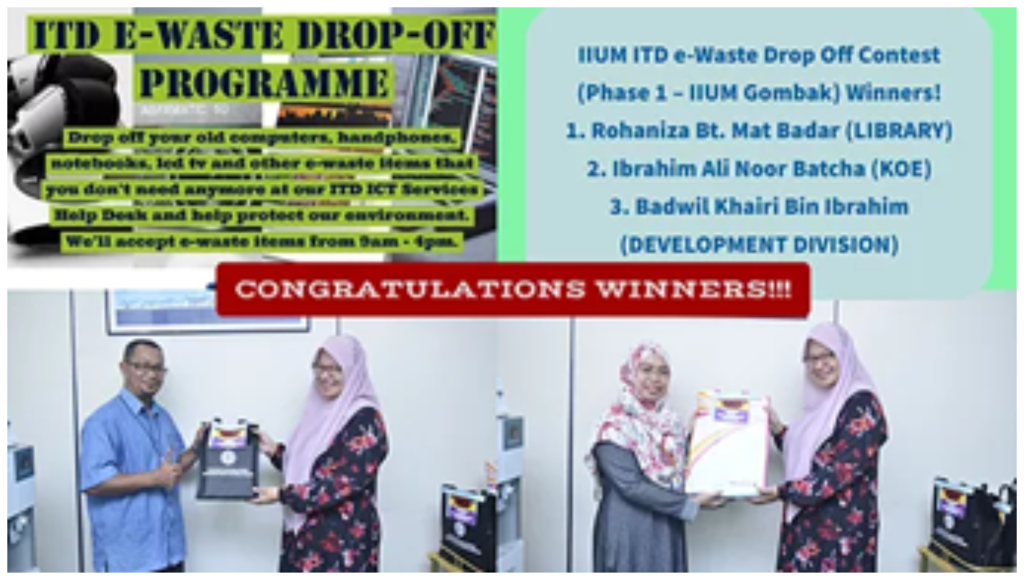
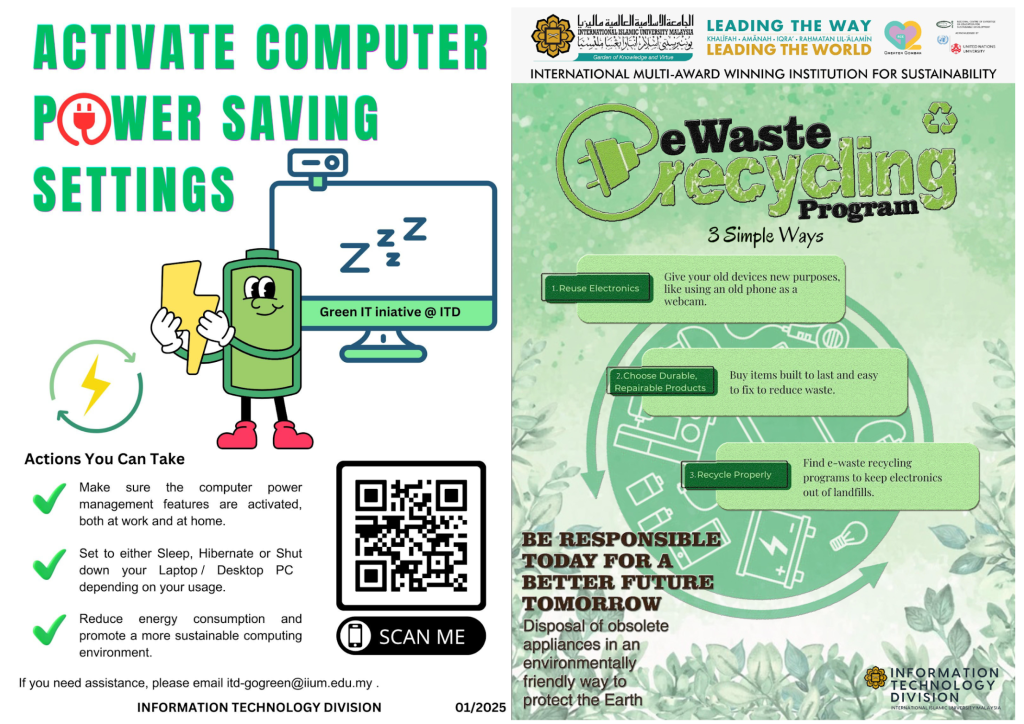
- Green computing is the environmentally responsible and eco-friendly use of computers and their resources. In broader terms, it is also defined as the study of designing, manufacturing/engineering, using and disposing of computing devices in a way that reduces their environmental impact.
- Public Transport Accessibility
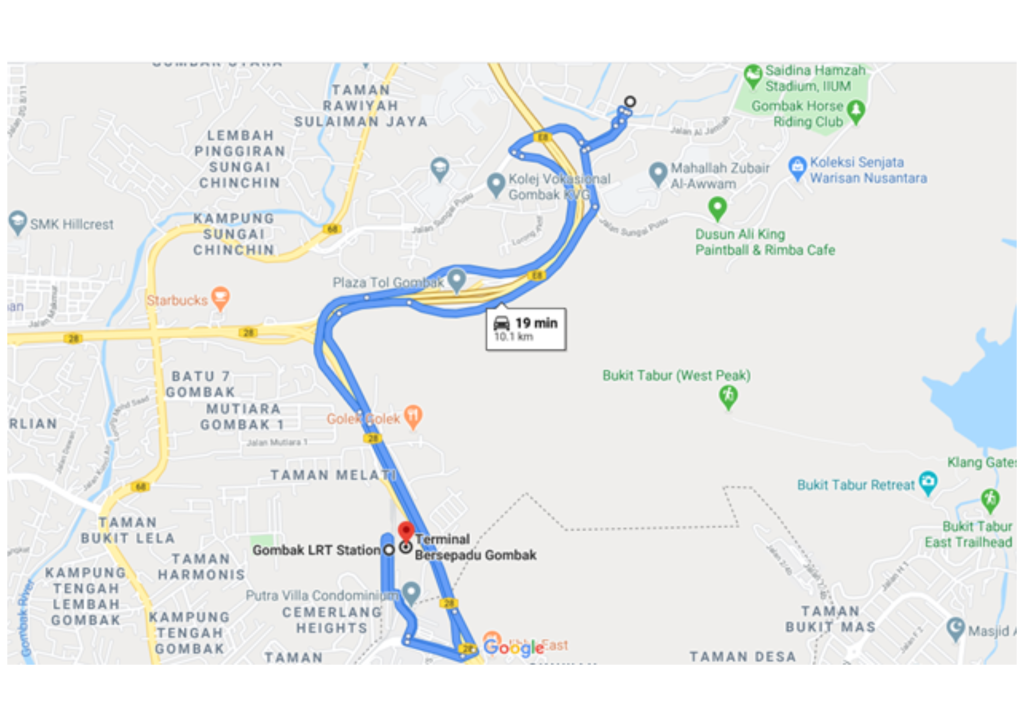
- IIUM Gombak campus is located within close proximity of public transport. The Gombak LRT station as well as the upcoming Terminal Bersepadu Gombak is within a relative distance of 19 minutes by bus. Shuttle bus services and public buses are accessible within the campus grounds which reduces the need for cars.
- By encouraging the use of public transport and less individual vehicles, this will result in a significant environmental impact in terms of emissions and pollution.
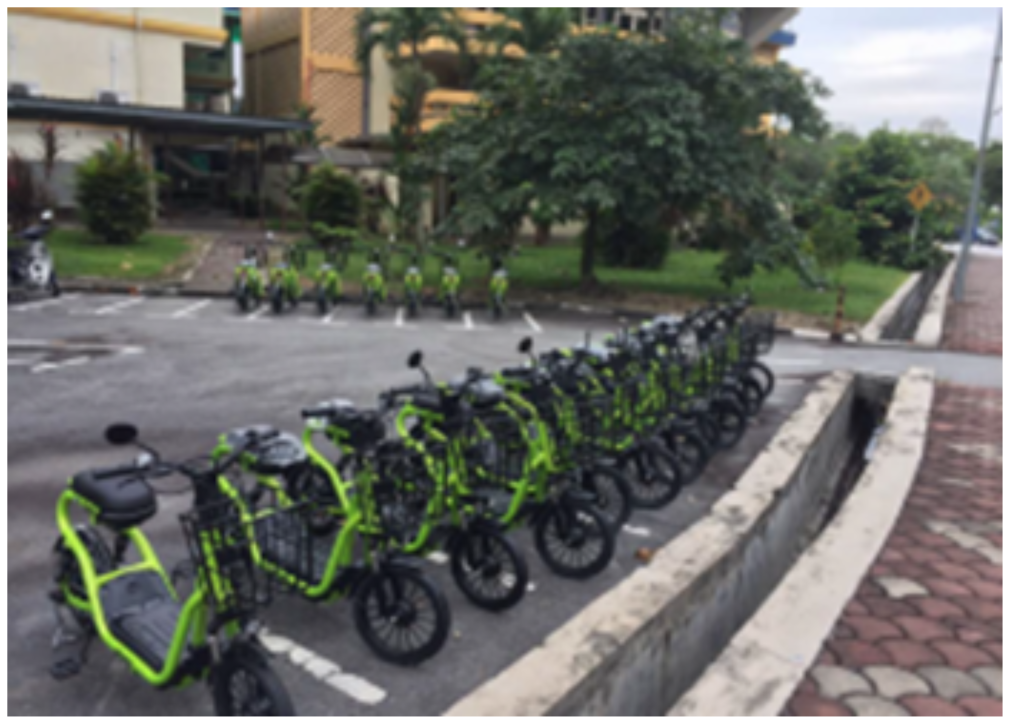
- UniRide E-Bike Sharing
- Affordable / cheaper rental fee to accommodate the needs for short distance travelling, from residential college to the faculty buildings and rental usage less than 1 hour.
- Potential reduction of carbon emission is 4,336 kg for 3 months.
UPGRADE BUILDING TO HIGHER ENERGY EFFICIENCY
Through the Energy Savings Performance Agreement (ESPA), IIUM has implemented a systematic building-upgrade programme that replaces outdated mechanical and electrical systems with optimized, energy-efficient alternatives. The retrofitting of more than 40 000 T8 LED lights, installation of power-quality devices, and deployment of intelligent chiller-control systems have produced verified energy savings of 14.5 million kWh annually equivalent to a 22.6 % reduction in total electricity consumption. This approach demonstrates IIUM’s long-term plan to continuously raise efficiency standards across all campuses without requiring upfront capital investment from the University.
PLAN TO REDUCE ENERGY CONSUMPTION
The University’s comprehensive Energy Efficiency and Saving Plan outlines both technological and behavioral strategies to minimize overall consumption. Technical measures include intelligent air-conditioning controls, optimized chiller sequencing, and continuous sub-metering for water and electricity systems. Operationally, IIUM enforces seasonal electricity-cost-saving initiatives such as centralized air-conditioning shutdowns during festive periods and conducts awareness campaigns to promote responsible usage among staff and students. These coordinated actions reinforce a culture of energy stewardship across the institution.
ENERGY-WASTAGE IDENTIFICATION
Regular energy audits and performance-verification reviews are integral to IIUM’s efficiency framework. Through the appointed energy efficiency company’s monitoring tools and on-site technical teams, areas of highest wastage are identified and corrective maintenance is promptly implemented. The inclusion of permanent measuring instruments such as temperature sensors, flow meters, and digital power meters linked to the Building Automation System (BAS) ensures that all systems operate within optimal efficiency ranges. This data-driven management enables continuous improvement and sustains long-term savings.
EMBARKING INTO RENEWABLE ENERGY
The University is also implementing campus-wide solar photovoltaic (PV) projects at its Gombak and Kuantan campuses under the Net-Energy-Metering (NEM3.0) scheme. Both projects utilize rooftop and existing car park structures to generate renewable energy, with zero-capex to the University. Under NEM3.0, solar energy generated by the PV systems can be exported to the national grid with excess energy credited against consumption at predetermined rates, optimizing cost savings and enhancing energy efficiency which will further optimize energy savings and reduce electricity costs. These initiatives align with IIUM’s sustainability goals, promoting energy efficiency and carbon reduction across its campuses.
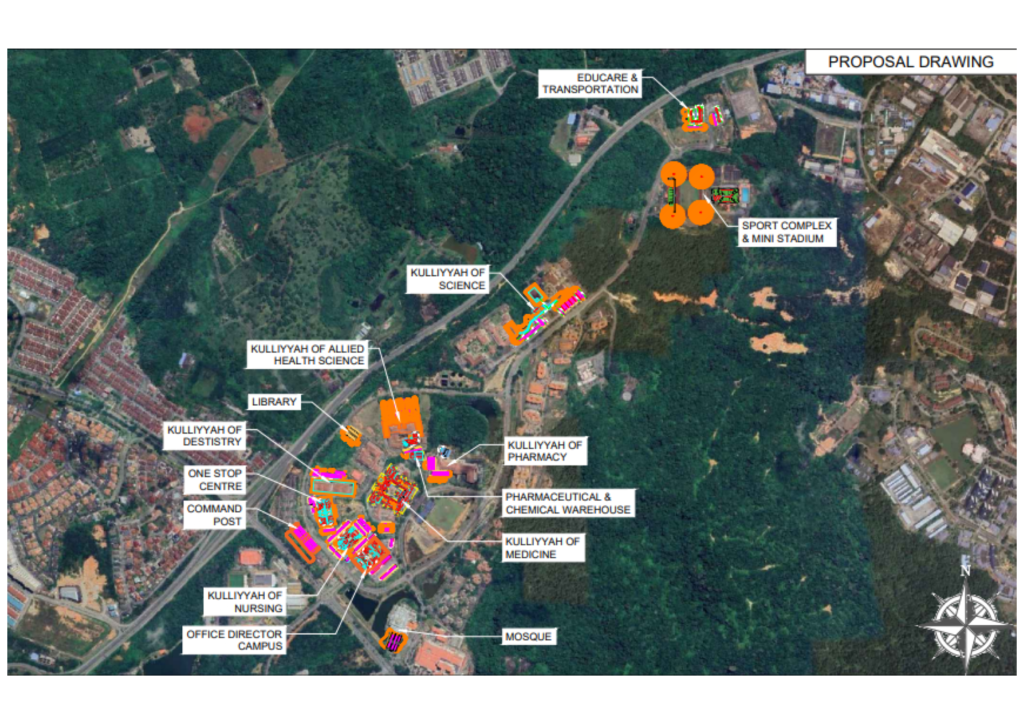
At present, a total of 5MWp solar panels are being installed on the buildings and car park rooftops at Kuantan Campus, involving 14 locations. From this project, between 8% to 15% reduction is expected in the electricity Maximum Demand charges. The project completion is targeted for mid-2026.
ENERGY AND THE COMMUNITY
LOCAL COMMUNITY OUTREACH FOR ENERGY EFFICIENCY
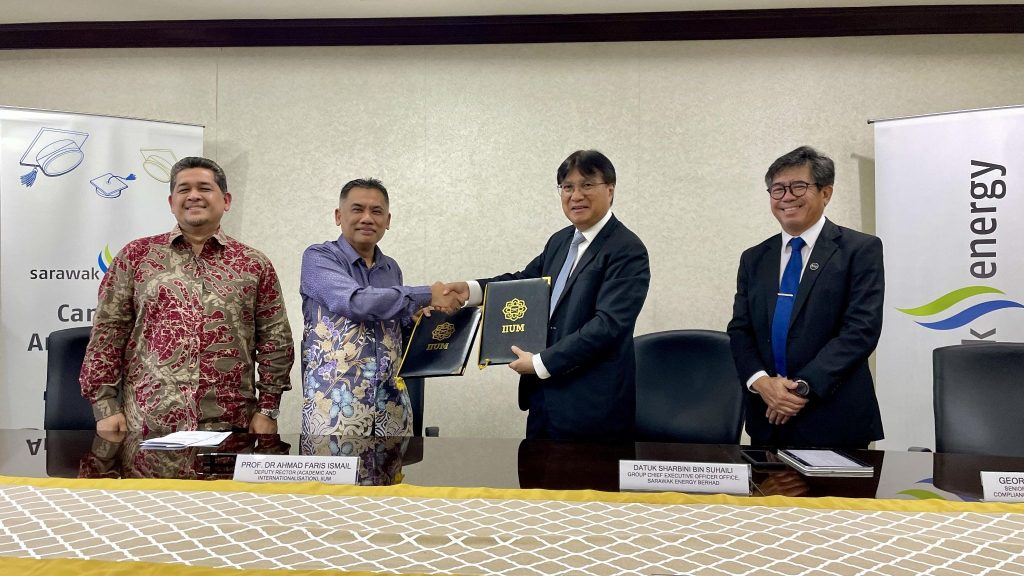
In 2024, the International Islamic University Malaysia (IIUM) signed a Memorandum of Understanding with Sarawak Energy Berhad to promote collaboration in renewable and sustainable energy. Through this partnership, IIUM aims to extend its efforts to the local community by organising awareness programmes on energy efficiency and clean energy. These initiatives help educate communities about reducing energy consumption, adopting sustainable practices, and understanding the benefits of renewable energy, supporting Malaysia’s transition towards a greener and more energy-efficient future.