International Islamic University Malaysia (IIUM) is committed to supporting SDG 2: Zero Hunger through a holistic, values-driven approach grounded in the university’s Islamisation, Integration, Internationalisation, and Comprehensive Excellence (IIICE) philosophy and Maqasid al-Shariah principles. IIUM’s sustainability framework emphasises human dignity (hifz al-nafs), preservation of resources, and social well-being, in alignment with its mission to develop balanced individuals and contribute to a just and compassionate society.
As a Garden of Knowledge and Virtue, IIUM promotes food security and equitable access to nutritious food across its campuses and surrounding communities. The University advances this agenda through programmes such as Mahallah Food Banks, the Sejahtera Food Sharing Initiative, zero-waste cafeteria campaigns, student welfare food assistance schemes, and composting activities that convert food waste into organic fertiliser. These efforts are complemented by community engagement programmes led by student organisations, Kulliyyahs, and the Sejahtera Centre for Sustainability and Humanity.
IIUM further supports SDG 2 through academic activities, research in sustainable agriculture, nutrition, and halal food security, and partnerships with government and civil society to enhance community food resilience. Collectively, these initiatives contribute to poverty alleviation, improved nutritional outcomes, sustainable food practices, and strengthened social equity, demonstrating IIUM’s leadership in operationalising SDG 2 within an Islamic values-based institutional ecosystem.
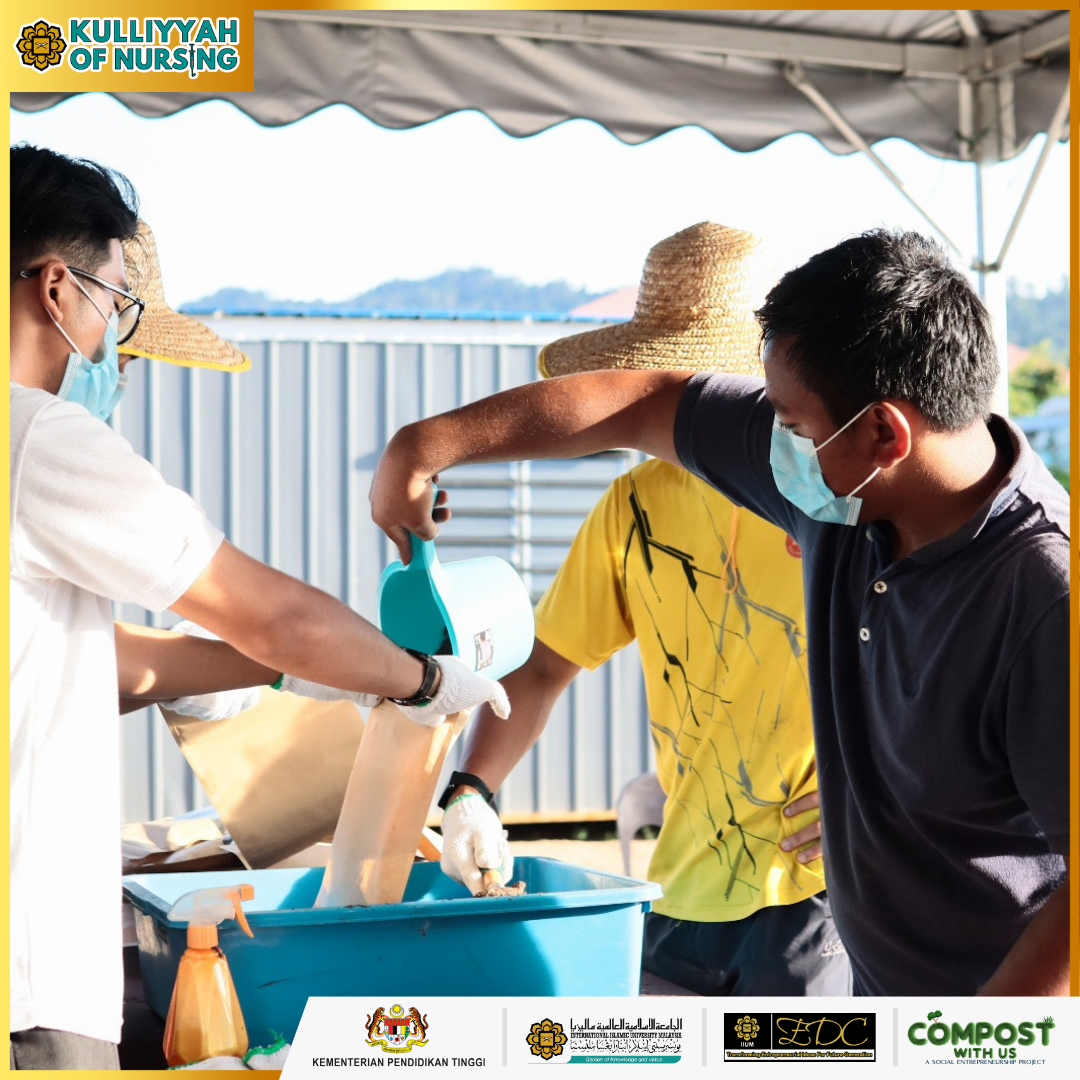
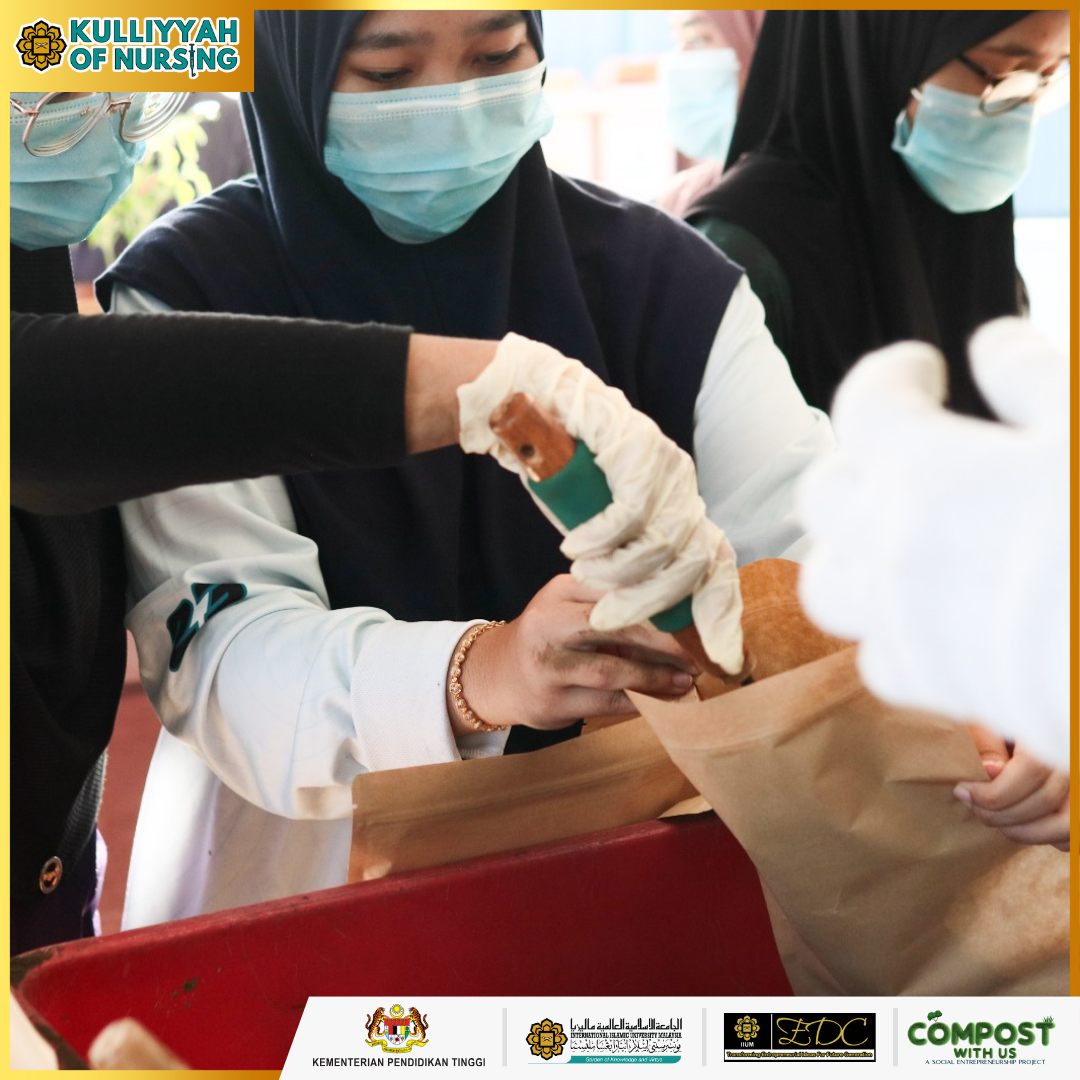
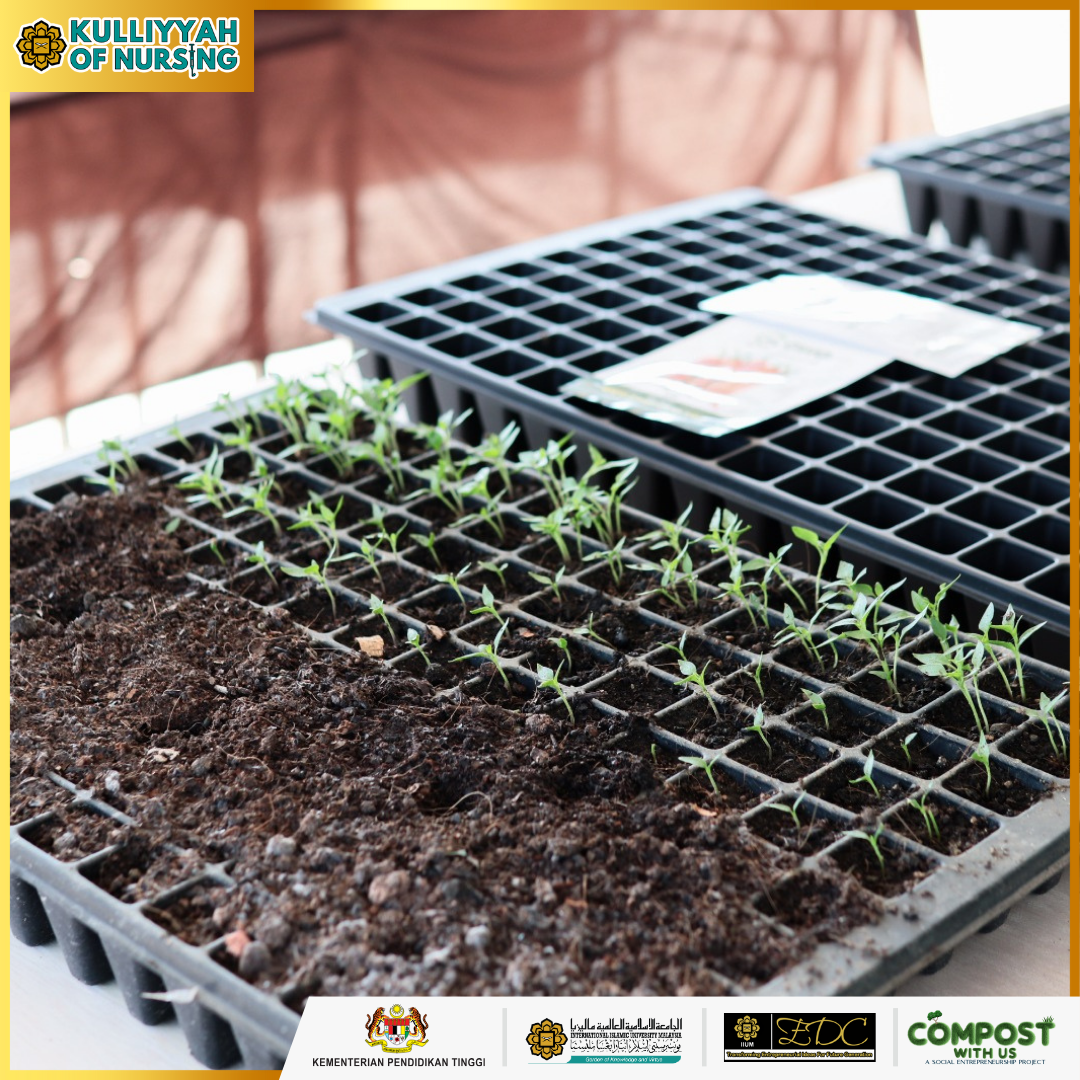
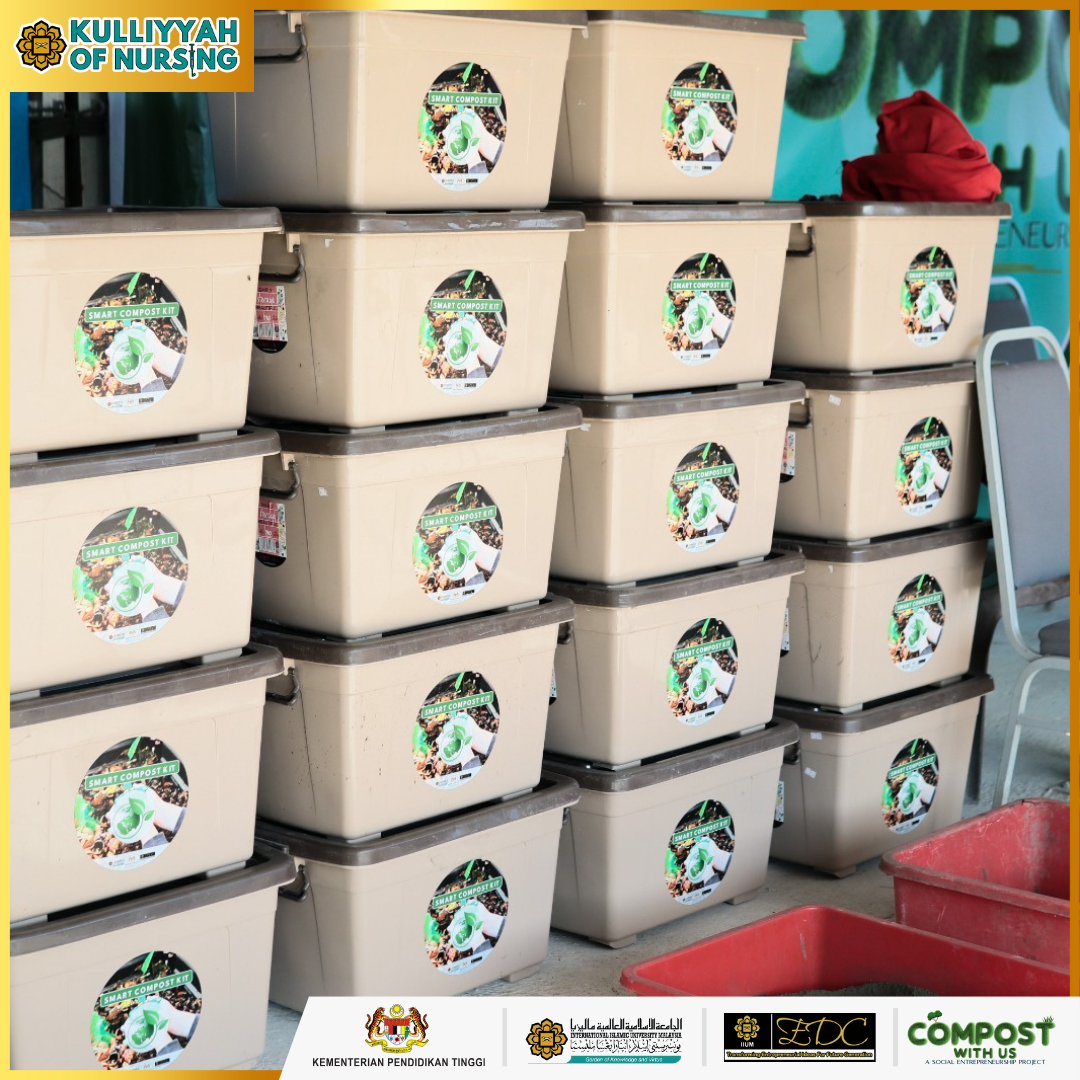
Join the journey at International Islamic University Malaysia (IIUM) as we turn food waste into opportunity. The “Compost With Us” project champions a circular-economy model on campus — collecting leftover and organic food-waste, composting it into rich soil medium, and empowering our community with hands-on training, seed-sowing and social-enterprise packaging. On 30 March 2024 at the Kuantan Campus, participants engaged in seed transplanting, fertilising flowering plants with compost derived from campus food-waste, and packaged compost for local marketing. Alongside iftar packs in the spirit of Ramadan, the event drew students, staff and community members into conscious stewardship of resources. This initiative reflects IIUM’s commitment to sustainable consumption, waste-minimisation and social entrepreneurship, nurturing both environment and enterprise.
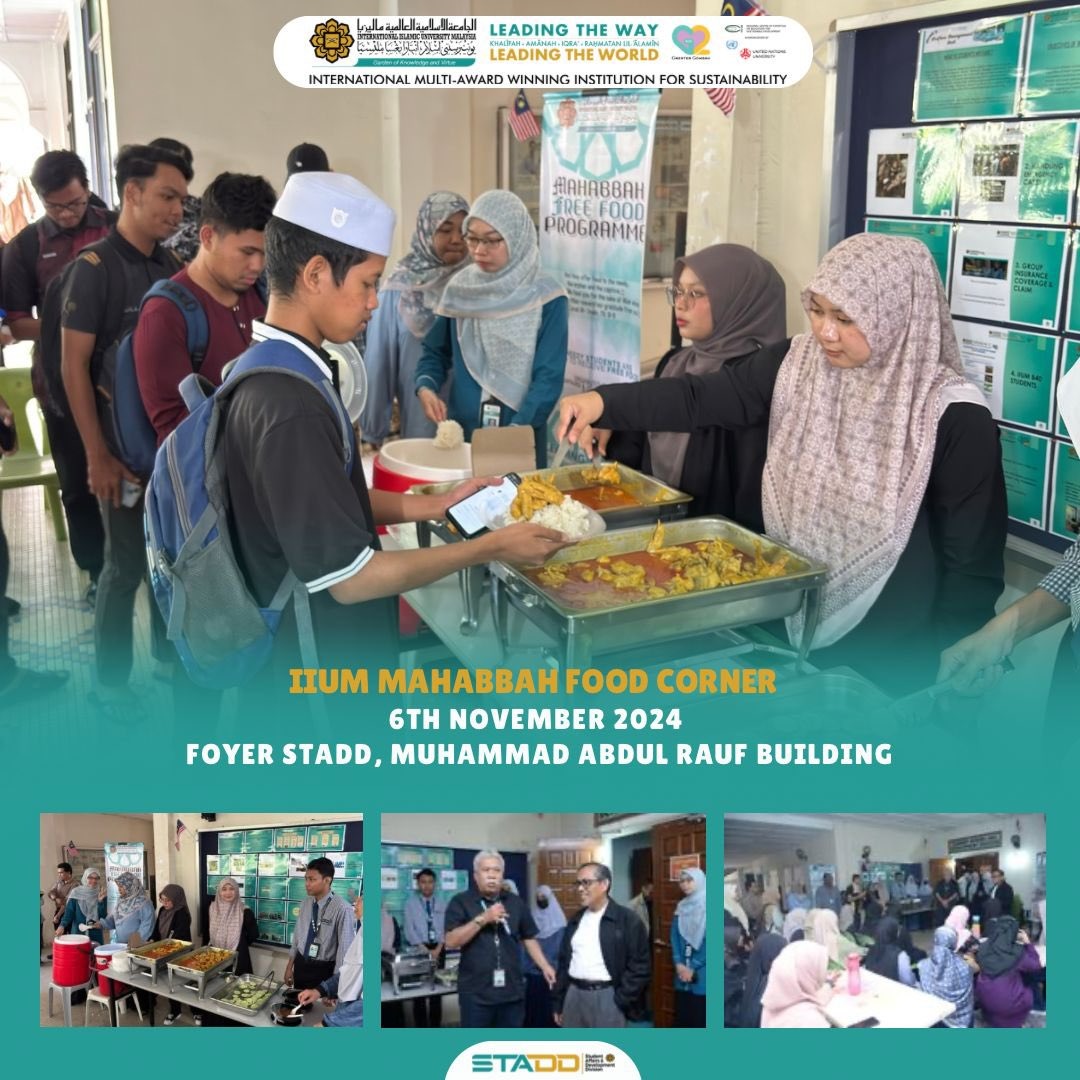
In November 2024, IIUM’s Student Affairs & Development Division (STADD) launched the Mahabbah Food Corner for Semester 1 of the 2024/2025 session. Under this programme, students in need are invited to receive a free lunch every Wednesday from 12:00 p.m. to 2:00 p.m., with availability limited to the first 200 students on a first-come, first-served basis. The programme’s tagline is “Zero Hunger for Students”, and it was formally inaugurated by the Deputy Rector (SDCE). This initiative demonstrates IIUM’s direct operational support to address student hunger and food insecurity on campus.
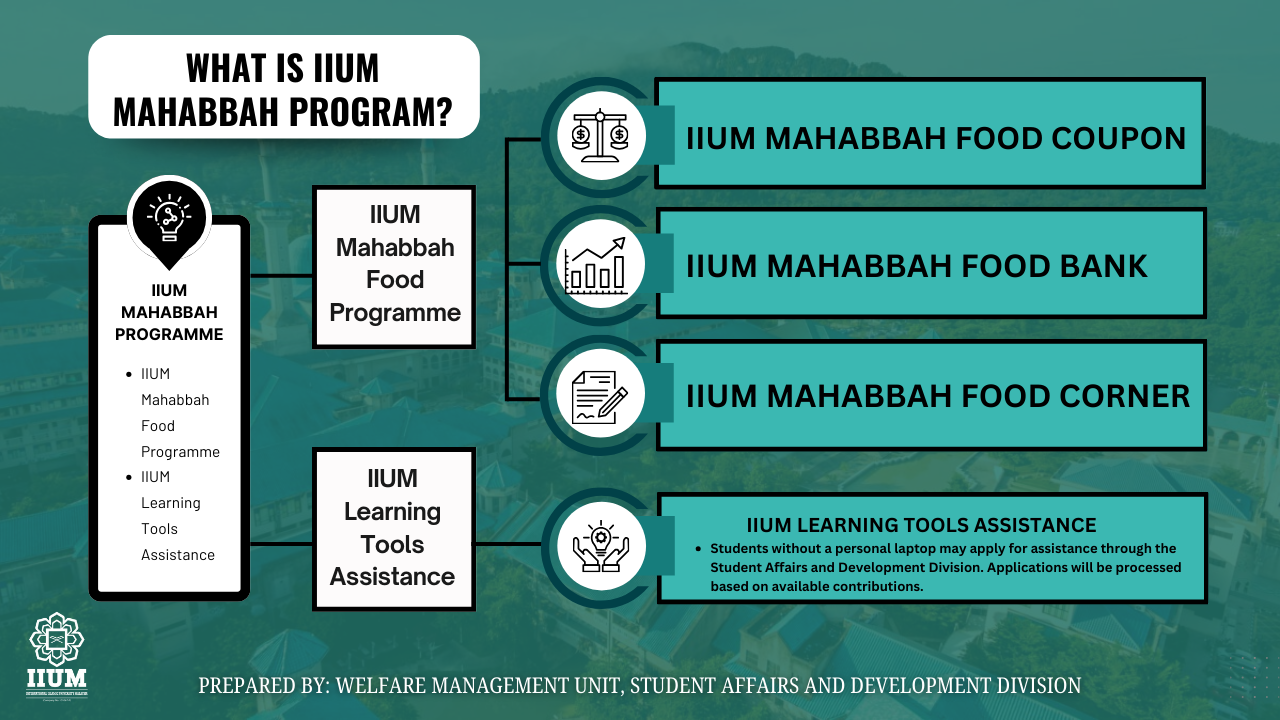
The IIUM Mahabbah Programme, overseen by the Welfare Management Unit within STADD, provides structured support for students facing financial hardship or food-insecurity. According to the programme page, eligible students may access:
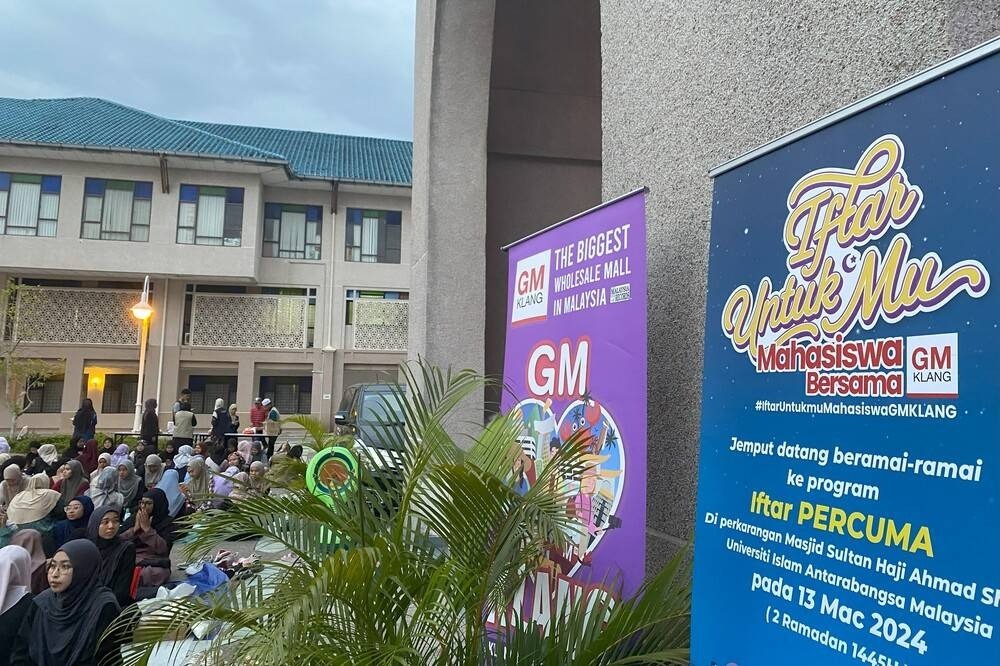
On 14 March 2024, IIUM hosted an iftar programme in collaboration with GM Klang, offering free meals to registered students. Initial allocation for 500 students was expanded to 700, demonstrating targeted assistance to students during Ramadan and direct alleviation of hunger at scale.
In November 2024 IIUM published the article “Food paradise at IIUM: Balancing budget and health”. The piece highlights how the university’s cafeteria and food-court outlets are increasingly offering a broadened menu of healthier food choices such as fruit bowls, salads, stir-fried vegetables and grilled dishes instead of fried items. The article emphasises that these offerings give students more sustainable and nutritious meal options, aligning food-service operations with healthier eating habits and responsible consumption. The shift towards healthier, sustainable food choices at IIUM supports the campus’s commitment to both nutrition and sustainability.
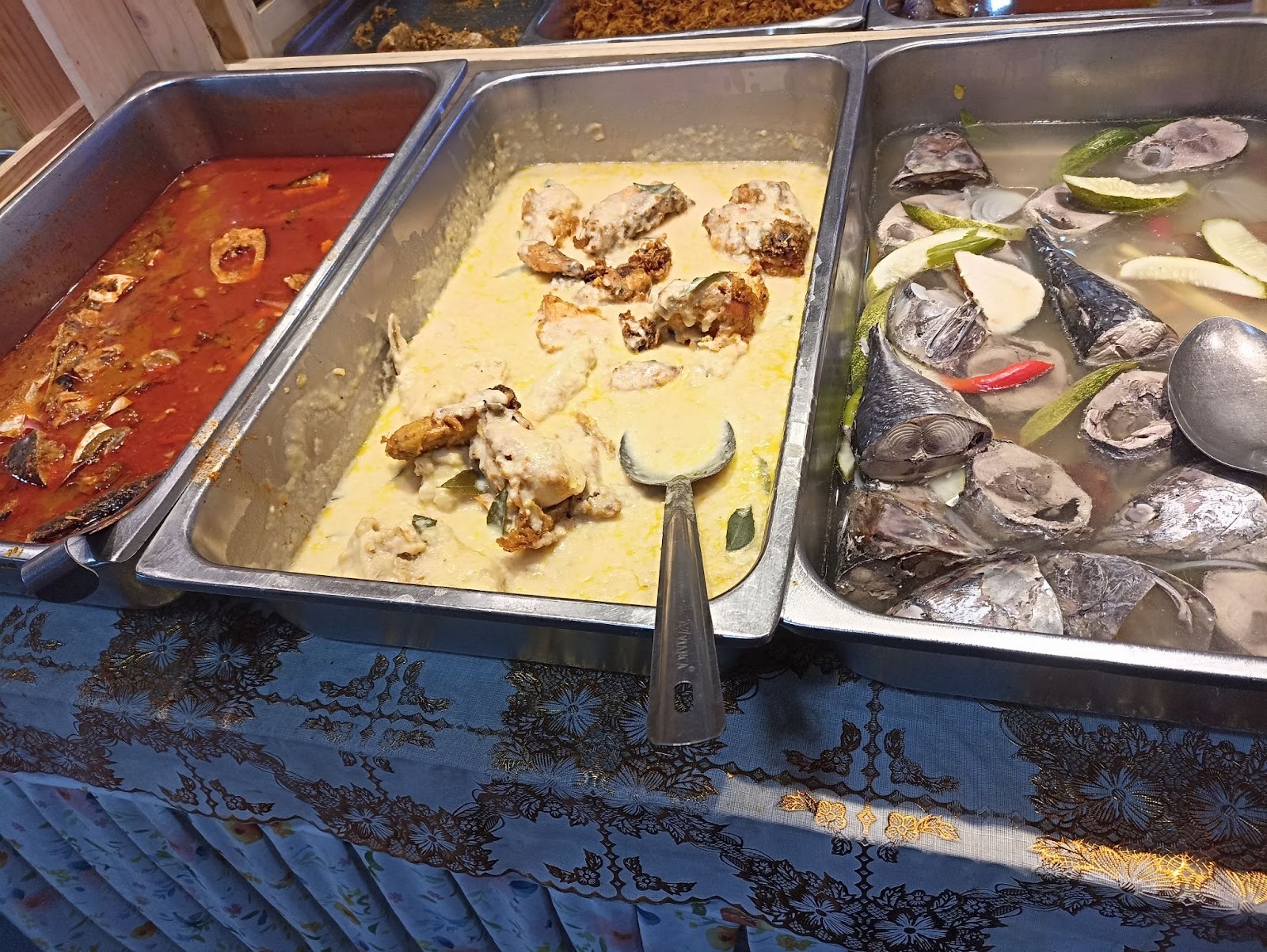
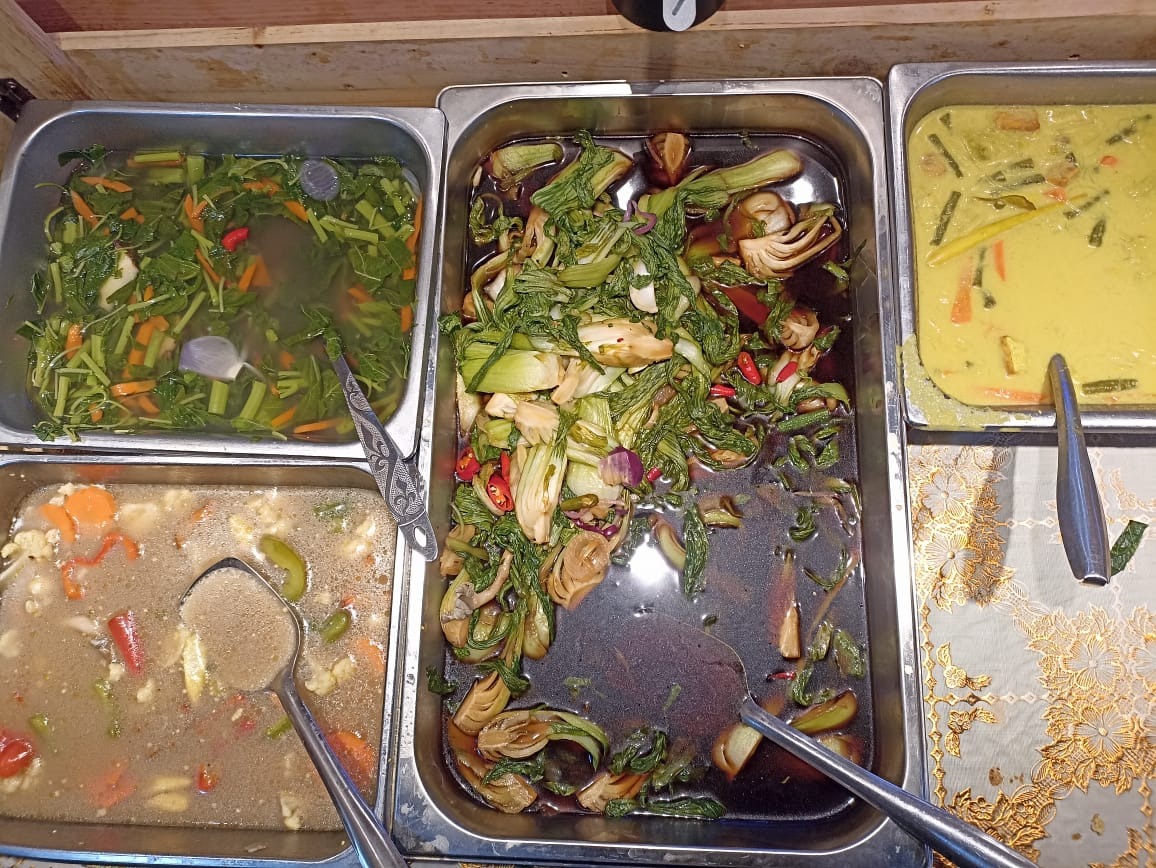
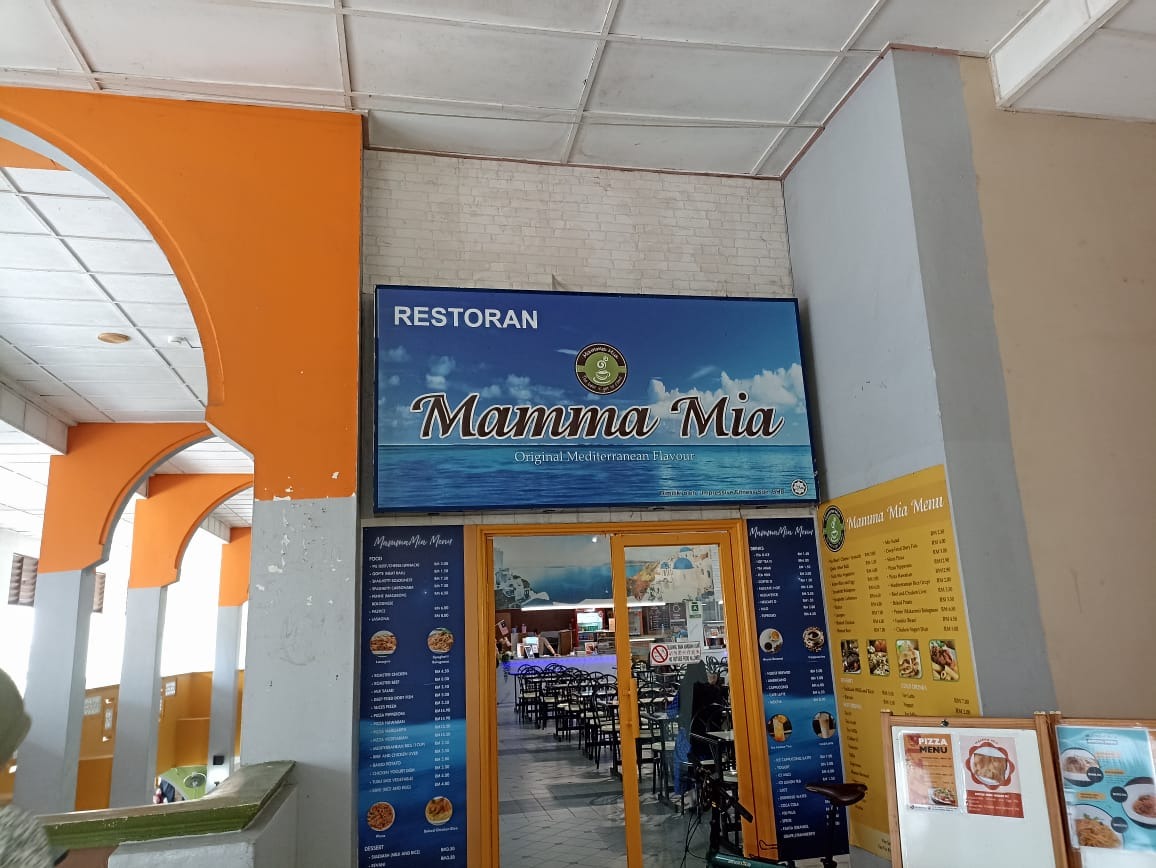
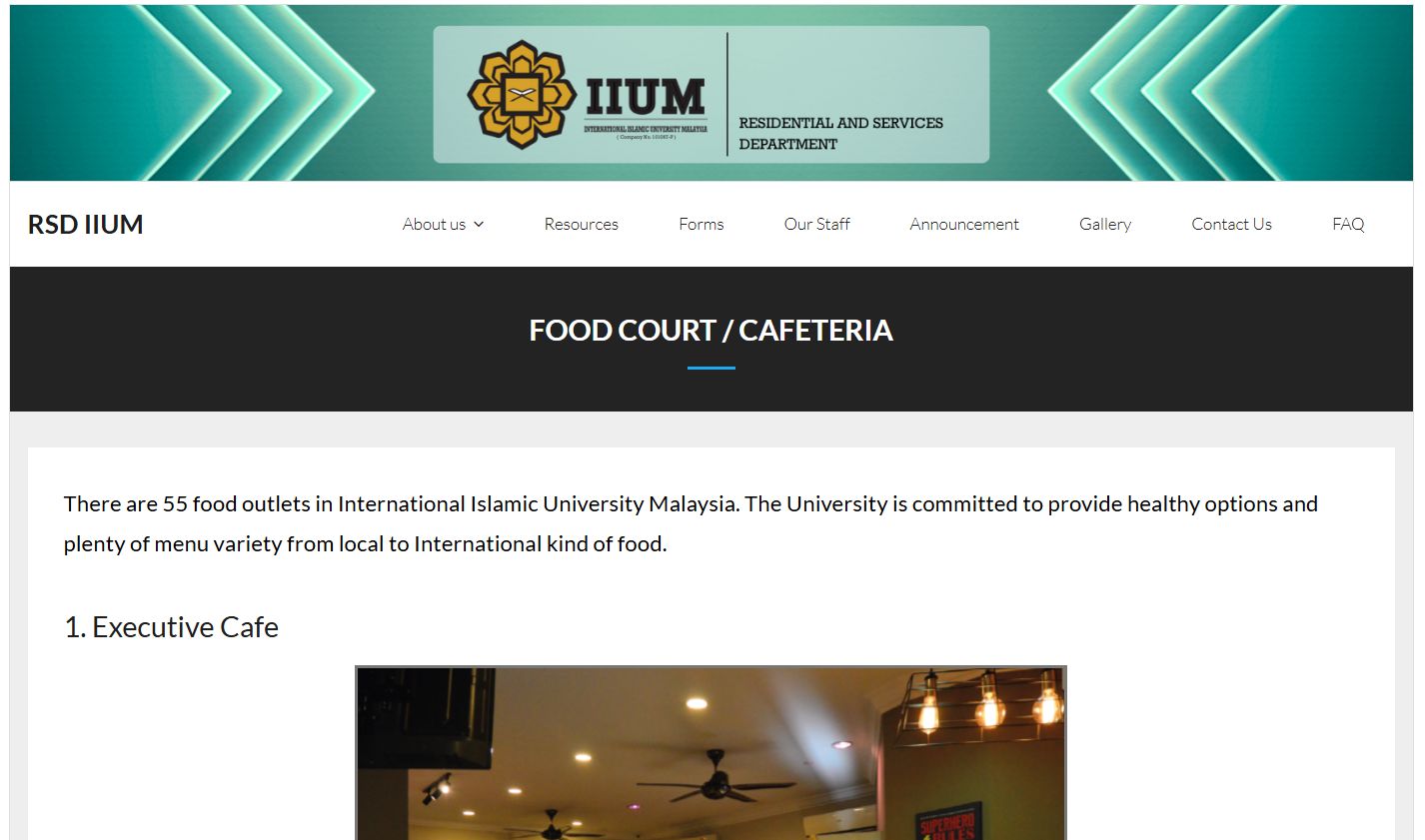
IIUM’s Residential and Services Department (RSD) webpage “Food Court / Cafeteria” states that the university has 55 campus food-outlets and is “committed to provide healthy options and plenty of menu variety from local to international kinds of food”. This includes vegetarian/plant-based-friendly meals, halal certification, and different cultural cuisines. Although the page does not label itself 2024 explicitly, it forms part of IIUM’s operating-menu information for students and affirms the university’s institutional commitment to providing sustainable and diverse food choices on campus.
Number of graduates from agriculture and aquaculture courses including sustainability aspects
International Islamic University Malaysia (IIUM) is committed to advancing sustainability education through programmes that integrate agricultural, aquacultural, and environmental sciences. In alignment with the United Nations Sustainable Development Goals (SDGs), particularly SDG 2 (Zero Hunger), IIUM offers academic programmes that focus on sustainable food production, marine ecosystems, and agri-based innovation.
To measure the University’s contribution to these sustainability domains, the indicator “Proportion of graduates in agriculture and aquaculture (including sustainability aspects)” is assessed using official convocation data. The dataset sourced from the IIUM Convocation Graduate Lists (Convocation Nos. 31–40), provides verified counts of all graduates and those completing agriculture- or aquaculture-related programmes. These include disciplines such as Marine Science, Plant Science, Agricultural Biotechnology, Environmental Management, and Sustainable Food Systems.
This indicator reflects IIUM’s ongoing efforts to produce graduates capable of contributing to sustainable resource management, food security, and ecological preservation. The analysis supports the University’s strategic direction under the Maqasid al-Shariah framework and its commitment to nurturing professionals who embody Rahmatan Lil-‘Alamin (mercy to all creation).
Source: Konvo. No. 31 – 40 .pdf
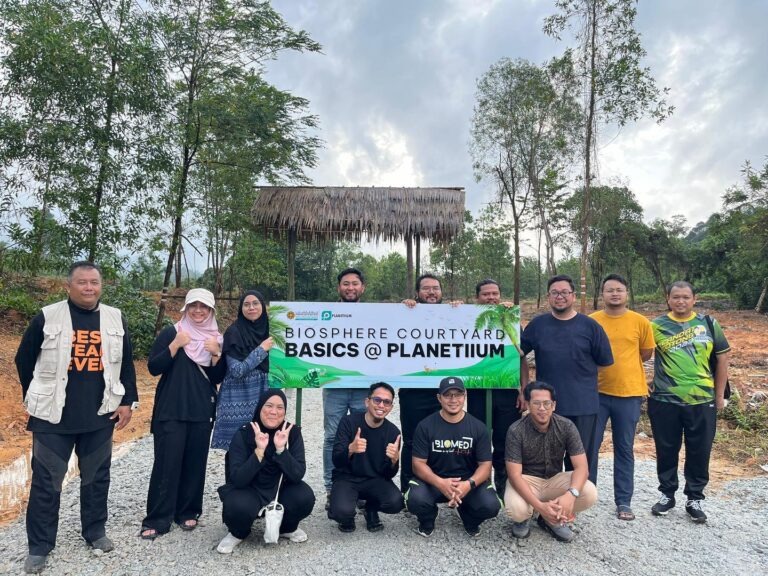
BASICS@PLANETIIUM: Biosphere Courtyard – Launching of Sustainable Farming Showcase
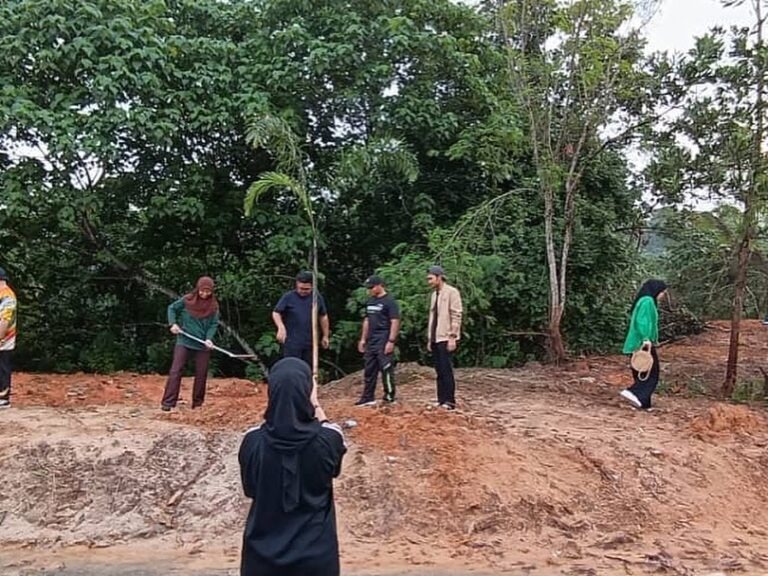
In 2024, IIUM launched the BASICS@PLANETIIUM (Biosphere Courtyard) project, which integrates permaculture, regenerative agriculture and organic-farming systems into a live demonstration facility. The showcase functions as a “living laboratory” where students, community members and local producers can observe, learn and adopt sustainable agriculture practices. Specifically, the facility emphasises rebuilding soil health, using local crop varieties, and demonstrating low-input sustainable production systems. Thus, enhancing access to food-security knowledge and transferable agricultural technology for producers and community stakeholders.
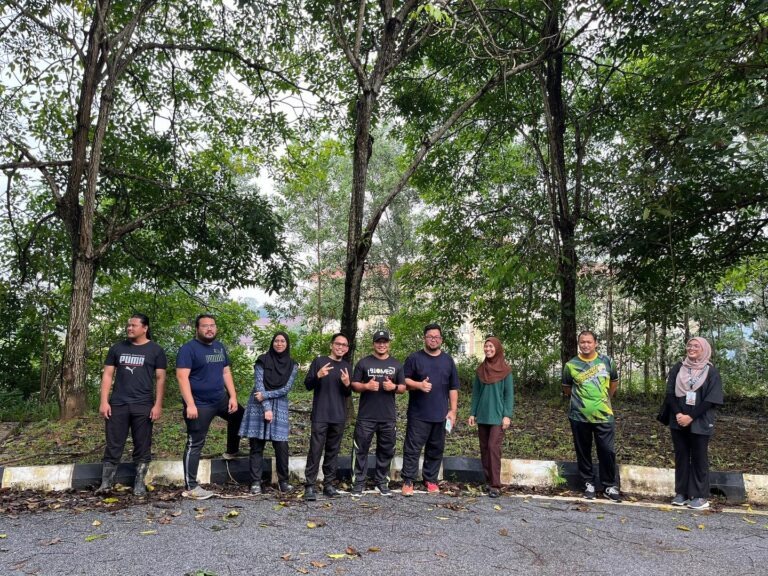
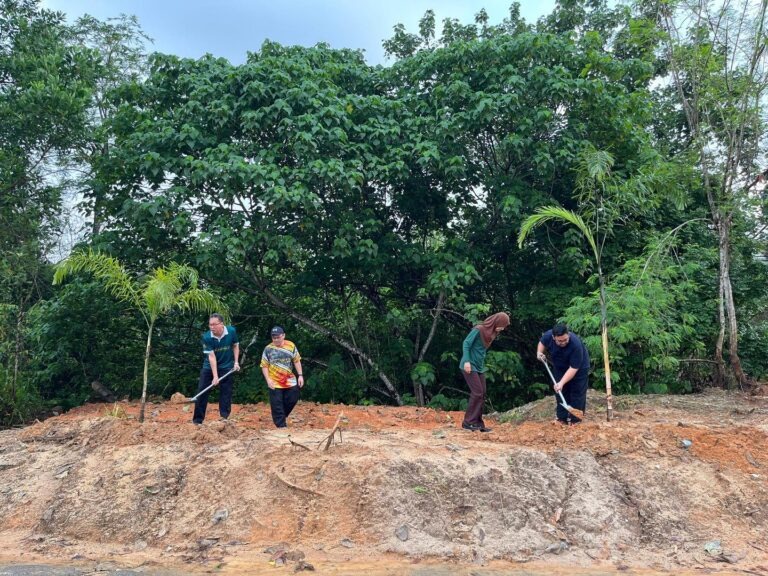
To support sustainable food systems and strengthen local food-production networks, IIUM organises and facilitates events that bring together local farmers, food producers, researchers and industry stakeholders. These events are designed to promote dialogue, knowledge-exchange, technology-transfer and networking among food-system agents. By convening such platforms, IIUM helps bridge academic expertise with practical agricultural and aquacultural practice, advancing local producer capacity and contributing to food-security objectives within the region.
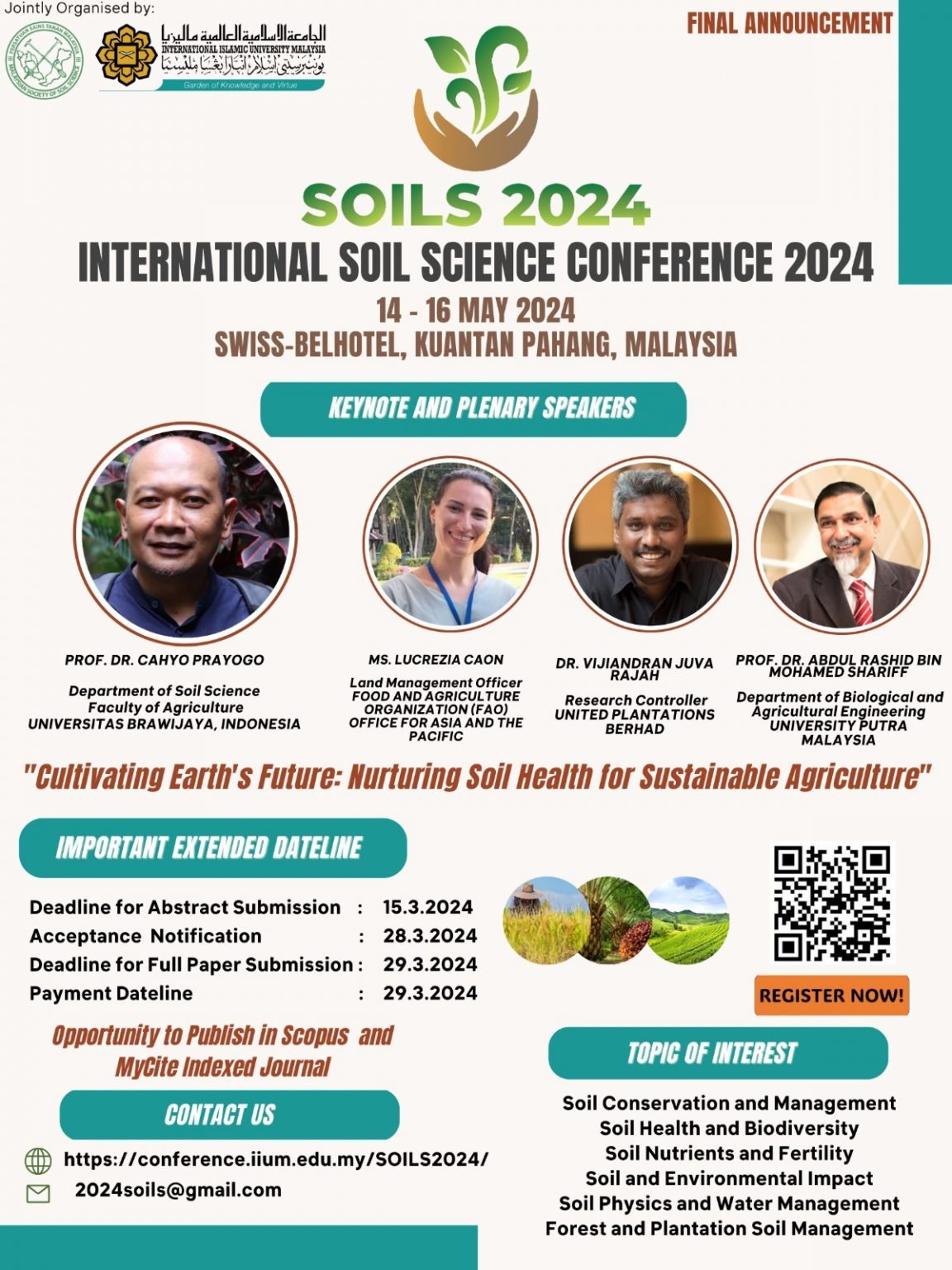
1) International Soil Science Conference 2024 (14-16 May 2024)
At IIUM’s Kuantan campus, the International Soil Science Conference 2024 served as a multidisciplinary forum for academics, agronomists, extension agents, policy-makers and industry professionals to explore advances in soil health and sustainable agriculture. With a theme of “Cultivating Earth’s Future: Nurturing Soil Health for Sustainable Agriculture”, the event emphasised practical applications for local producers, including sessions on soil-management technologies, crop-productivity enhancement and sustainable farming systems. This kind of event offers local farmers and food-producers a direct interface with research, innovations and networks purposely in facilitating knowledge transfer and strengthening producer practice.
University access to local farmers and food producers
IIUM is committed to strengthening food-system resilience and sustainable agriculture by providing local farmers and food-producers access to its institutional resources including laboratories, technology platforms, demonstration systems, and plant or stock materials. This access enables community producers to adopt improved farming practices, engage with innovation, and benefit from the university’s knowledge infrastructure. Through this approach, IIUM operationalises its role as a “Garden of Knowledge and Virtue” and supports sustainable development by embedding academic-practice linkages in the local agrifood sector.
1) VAFS: Vertical Aquafarming System by INHART
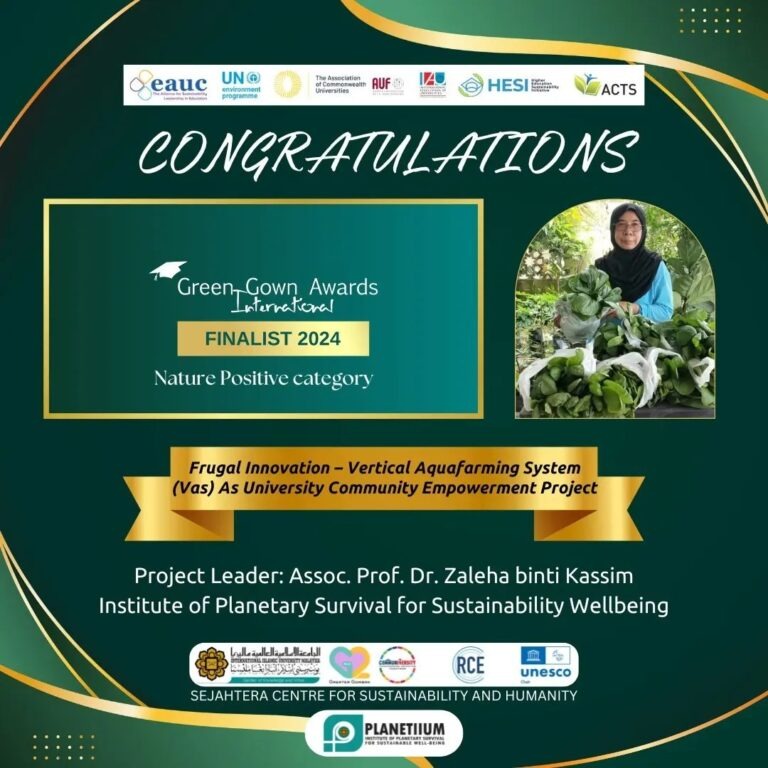
The IIUM facility “VAFS: Vertical Aquafarming System” (under the Institute of Planetary Survival for Sustainable Well-being, PLANETIIUM) offers an innovative soilless agriculture and fish-farming system. According to its project description published in 2024, the system is designed to be affordable and accessible to communities experiencing poverty and hunger, allowing local producers to adopt aquaponic technologies. By providing this technological platform, IIUM extends its facility access beyond the campus to local food producers who may implement vertical aquafarming for efficient water use, integrated plant/fish production, and local food security benefits. This is a clear instance of university capability leveraged for community farming practices.
Sustainable food purchases
IIUM is dedicated to embedding sustainability across its operations including procurement. The indicator “Sustainable food purchases – Prioritise purchase of products from local, sustainable sources” requires evidence that the university’s food-services or procurement practices favour sourcing from local producers and sustainable supply chains. This supports SDG 2 (Zero Hunger) and by reducing food-miles, supporting local economies, and enabling environmentally-efficient food systems.
1) IIUM Sustainable Food Bazaar: Promoting Local and Eco-Friendly Food Choices
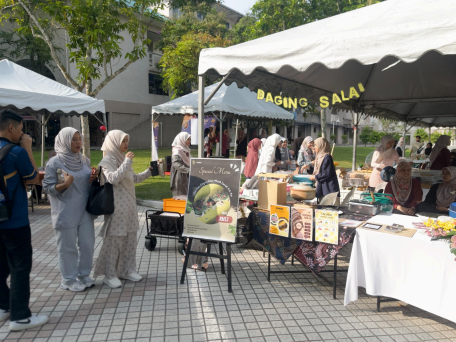
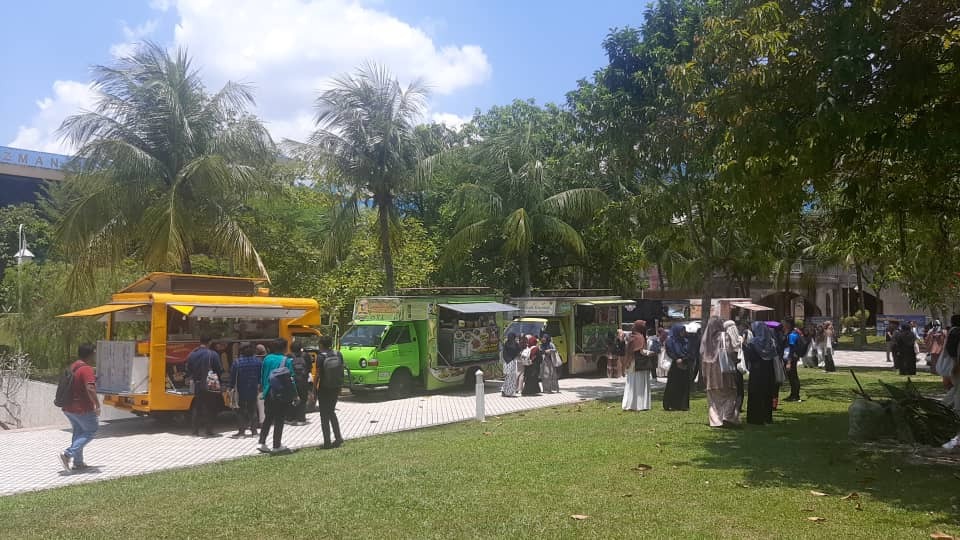
In 2024, IIUM hosted several on-campus food bazaars and food-truck gatherings where vendors were sourced from local, small-scale producers and entrepreneurs who specialise in sustainable, home-made, or traditional foods. The attached photographs show examples of these initiatives held within the Gombak Campus courtyard.
The IIUM Sustainable Food Bazaar featured stalls and food trucks selling locally prepared products, such as daging salai (smoked meat), traditional kuih, and locally grown produce to highlighting the university’s emphasis on supporting nearby suppliers instead of relying on imported or industrial food chains. Vendors were carefully selected based on their use of local ingredients, minimal packaging, and halal-certified sustainable practices.
These events provided affordable meal options for students and staff while strengthening the local food economy. They also acted as practical platforms for awareness on sustainable consumption, allowing the IIUM community to engage directly with local producers and learn about responsible food-sourcing principles.
By facilitating and prioritising the participation of local vendors in its campus food ecosystem, IIUM demonstrates a tangible commitment to sustainable procurement and the promotion of locally sourced food in alignment with the UN Sustainable Development Goals.
2) Article titled “How Food Traditions Can Help Achieve Global Goals”
In December 2024, IIUM published an article titled “How Food Traditions Can Help Achieve Global Goals”, in which the university emphasises the role of local, fresh produce and seasonal ingredients in sustaining food-security and lowering environmental impact. The article states that “traditional food markets focus on fresh, locally sourced produce, reducing the need and reliance for processed and imported goods. This reflects IIUM’s awareness and public positioning of its food operations favouring local sourcing and sustainable procurement. By promoting and advocating for local produce and sustainable food-choice culture, IIUM shows alignment with the indicator’s requirement of prioritising purchases from local, sustainable sources.
Source: https://news.iium.edu.my/?p=182158