
NURTURING UMMATIC EXCELLENCE THROUGH SDG 10: REDUCED INEQUALITIES SUPPORT FOR FIRST-GENERATION STUDENTS
IIUM is committed to promoting educational equity by supporting first-generation students, particularly those from the B40 income group, to access and succeed in higher education.
In 2023, the Ministry of Higher Education (MOHE) launched the Program Pembangunan Siswa Sulung (First-Generation Student Development Programme) across 20 public universities, building on the success of Sulung 1.0, first introduced in 2022 at eight institutions. IIUM participates actively in this initiative to ensure that financial barriers do not prevent capable students from pursuing their studies.
| SULUNG PROGRAMME | COHORT | SEMESTER | TOTAL APPROVED | ACCEPTED | GENDER (Active) | INACTIVE (Declined / Withdrawn / Graduated) | ||
| M | F | M | F | |||||
| 2.0 | 1 | SEMESTER 1, 2023/2024 | 87 | 72 | 11 | 48 | 3 | 10 |
| 2 | SEMESTER 1, 2023/2024 | 121 | 90 | 11 | 61 | 4 | 14 | |
| 3 | SEMESTER 2, 2023/2024 | 85 | 69 | 19 | 45 | 1 | 4 | |
| 3.0 | 1 | SEMESTER 1, 2024/2025 | 158 | 158 | 23 | 111 | 7 | 17 |
| 2 | SEMESTER 2, 2024/2025 | 174 | 174 | 36 | 67 | 25 | 46 | |
Under the IIUM Sulung Programme, eligible first-generation students receive a waiver of all university fees, except hostel and other externally imposed or professional body fees. The funding is managed internally through a university waiver mechanism, ensuring transparent and sustainable support.
The programme also provides structured student development opportunities, focusing on:
- Personality and skills development
- Community engagement and volunteer work
- Academic support and counselling
Administered by the Welfare Management Unit, Student Affairs and Development Division (STADD), the initiative reflects IIUM’s holistic approach to inclusion, combining financial assistance with personal and academic growth. It plays a vital role in empowering first-generation students to thrive within the university and beyond, aligning with IIUM’s mission to advance social mobility and reduce inequality.
Further Reference
IIUM’s implementation of the Sulung Programme, managed by the Welfare Management Unit, STADD, providing fee waivers and development support for first-generation undergraduate students.
Link: https://division.iium.edu.my/stadd/iium-sulung-2-0/
INTERNATIONAL STUDENTS FROM DEVELOPING COUNTRIES
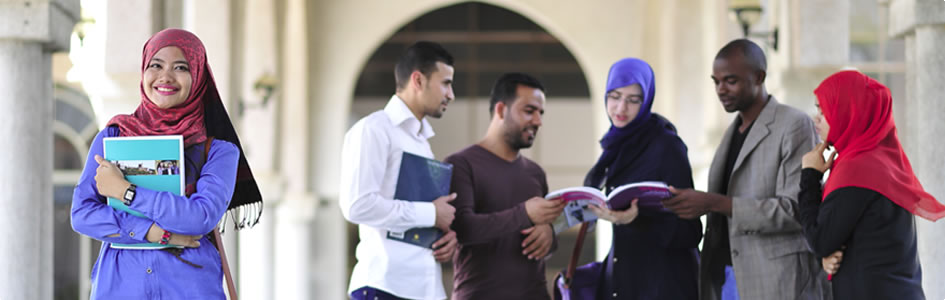
| Year | Total Students | International Students from Developing Countries | % from Developing Countries |
| 2024 | 32229 | 1441 | 4.47% |
FINANCIAL SUPPORT AND ACCESS FOR INTERNATIONAL STUDENTS FROM DEVELOPING COUNTRIES
International Islamic University Malaysia (IIUM) demonstrates its commitment to inclusive and equitable access to higher education through a range of scholarships and support mechanisms for international students, particularly those from developing and Muslim-minority countries. The University’s Scholarship and Financial Assistance portal outlines financial aid opportunities designed to assist international candidates and students from disadvantaged backgrounds to pursue studies at IIUM. This reflects IIUM’s mission of “Rahmatan lil ‘Alamin” education as a mercy to all by ensuring affordability and inclusivity across national and socio-economic lines.
URL: https://division.iium.edu.my/finance/scholarship
INTERNATIONAL SCHOLARSHIPS SUPPORTING STUDENTS FROM DEVELOPING NATIONS
The Malaysia International Scholarship (MIS) 2024, promoted through IIUM’s Centre for Postgraduate Studies, invites high-achieving international students from eligible developing countries to pursue postgraduate education at Malaysian public universities. The scheme provides tuition fee coverage, living allowances, and health insurance. IIUM’s participation in MIS contributes directly to enhancing education access for students from developing regions and aligns with SDG 10 by fostering international mobility and opportunity for under-represented communities.
URL: https://centre.iium.edu.my/cps/malaysia-international-scholarship-mis-2024
INCLUSIVE ADMISSION PATHWAYS FOR INTERNATIONAL STUDENTS
IIUM’s Entry Requirements for International Candidates document provides transparent admission standards and qualification equivalences that facilitate the enrolment of students from diverse educational systems, including those in developing countries. The inclusive framework underscores IIUM’s effort to promote diversity, equity, and accessibility for all qualified applicants, thereby supporting SDG 10’s aim of reducing inequalities within and among nations through higher education.
SUPPORTING PERSONS WITH DISABILITIES (PWD)
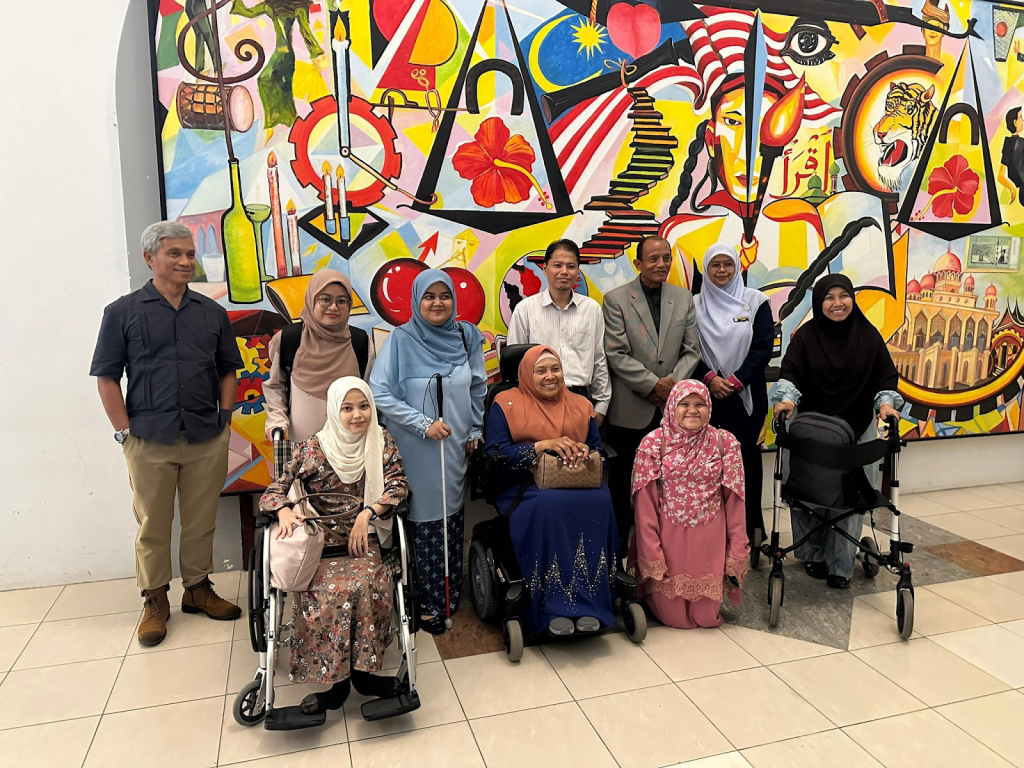
STUDENTS WITH DISABILITIES
Proportion of Students with Disabilities
| Year | Total Students | Students with Disabilities | % Students with Disabilities |
| 2024 | 32229 | 124 | 0.38 |
EMPLOYEES WITH DISABILITIES
Proportion of Employees with Disabilities
| Year | Total Employees | Employees with Disabilities | % Employees with Disabilities |
| 2024 | 5554 | 20 | 0.36% |
MEASURES AGAINST DISCRIMINATION
NON-DISCRIMINATORY ADMISSIONS POLICY
IIUM Admissions Governed by Nationally Regulated, Non-Discriminatory Process
The admissions process at the International Islamic University Malaysia (IIUM) follows the national standards established by the Malaysian Qualifications Agency (MQA) and the Ministry of Higher Education. These regulations ensure that all applicants are assessed based on transparent academic and qualification criteria, without discrimination on the grounds of race, gender, religion, or socioeconomic background. The Admission Regulations 2024, implemented in July 2024, formalise these procedures, aligning IIUM’s practices with the Malaysian Qualifications Framework and national higher education admission guidelines. Any specific admission considerations such as those for students with disabilities or from underrepresented groups are administered within the legal framework of equitable access as defined by MQA.
URL: https://division.iium.edu.my/amad/wp-content/uploads/sites/2/2024/07/ADMISSION-REGULATIONS-2024.pdf
UNDERREPRESENTED GROUPS’ APPLICATIONS
In 2024, the International Islamic University Malaysia (IIUM) upheld its commitment to equitable access and inclusion through targeted admission opportunities for underrepresented groups.
A total of 854 applications were received from Bumiputera students from Sabah and Sarawak, with 75 accepted, reflecting an 8.78% acceptance rate. This demonstrates IIUM’s ongoing effort to support regional representation and educational participation from East Malaysia.
For low-income (B40) students, the University received 12,645 applications, admitting 2,768 students, which translates to a 21.9% acceptance rate. This aligns with national efforts to enhance access to higher education among financially disadvantaged groups.
Meanwhile, students with disabilities submitted 132 applications, with 36 students accepted, resulting in a 27.27% acceptance rate. The higher acceptance rate underscores IIUM’s inclusive admission policies and the university’s commitment to accommodating diverse learning needs.
Collectively, these figures highlight IIUM’s sustained dedication to promoting diversity, social mobility, and inclusive educational pathways in line with its mission and the principles of Rahmatan lil-‘Alamin (Mercy to All).
| Category | Year | Total Applications | Total Accepted | % Accepted |
| Ethnic Group (Bumiputera Sabah & Sarawak) | 2024 | 854 | 75 | 8.78 |
| Low-Income Students | 2024 | 12645 | 2768 | 21.90 |
| Students with Disabilities | 2024 | 132 | 36 | 27.27 |
SUPPORT FOR UNDERREPRESENTED GROUPS
Counselling and Peer Support Services at IIUM
The Counselling and Career Services Centre (CCSC) at the International Islamic University Malaysia (IIUM) provides comprehensive mental health and psychosocial support for students across all campuses. The Centre offers confidential individual and group counselling sessions, designed to help students manage personal, academic, emotional, and social challenges during their university journey. Services are delivered by qualified counsellors registered with the Malaysian Board of Counsellors.
The CCSC also conducts preventive and developmental programmes such as stress-management workshops, emotional resilience training, and time-management seminars, which particularly benefit students from underrepresented or disadvantaged backgrounds who may experience additional adjustment pressures. Counsellors collaborate with Kulliyyahs, residential colleges (Mahallahs), and student societies to identify students in need and provide timely interventions.
In addition to professional counselling, IIUM nurtures peer-based support through the PEERS (Peer Educators, Encouragers, and Role Supporters) initiative. This student-driven programme trains volunteers to provide empathetic listening, basic guidance, and referral assistance to fellow students facing mental health, academic, or social difficulties. PEERS members receive training and supervision from CCSC counsellors, ensuring ethical and effective peer engagement.
The Centre also provides specialised services including career counselling, psychometric assessments, crisis intervention, and outreach programmes for vulnerable or high-risk student groups. Through these combined approaches, IIUM promotes mental wellbeing, inclusion, and equitable access to support, contributing directly to SDG 10 by reducing barriers and ensuring that all students regardless of background can thrive academically and personally.
Link: https://centre.iium.edu.my/ccsc/counselling-related-programme
ACCESSIBLE FACILITIES
INFORMATION ON FACILITIES FOR PERSONS WITH DISABILITIES (PWD)
| No. | Facility | Quantity | Capacity | Pictures and Remarks |
| 1 | Male hostel rooms | 6 (Mahallah Uthman – Gombak)2 (Kuantan)1 (Pagoh)2 (Gambang) | 6 | Each room has an attached PWD-friendly bathroom. |
| 2 | Special residential units for PWD students and their assistants/caregivers | 2 (Mahallah Ruqayyah – Gombak) | 4 | PWD-friendly bedroom, bathroom, living room and kitchen. Air-conditioned. |
| 3 | Female hostel rooms | 4 (Mahallah Safiyyah – Gombak)2 (Kuantan)1 (Pagoh)4 (Gambang) | 4 | Shared PWD-friendly bathrooms with two WC height levels. |
| 4 | Tactile paths for the visually impaired | Gombak, Gambang | – | Paths connect male PWD hostel blocks to cafeteria, musolla, and academic buildings. |
| 5 | Self-service laundry at hostels | 1 | Shared | Located at Mahallah Faruq. |
| 6 | Wheelchair-accessible pathways | Gombak, Gambang, Kuantan, Pagoh | – | Gombak: Pathways connect hostels (Uthman & Safiyyah) to most faculties, library, administration, mosque, stadium, and business premises.Gambang: Pathways connect all hostels to faculties, administration, library, mosque, stadium, and business premises. |
| 7 | Dedicated PWD rooms in library | 2 (Gombak) | Shared | – |
| 8 | Carrel rooms in library | 2 (Gombak) | Shared | – |
| 9 | Screen reader software in PWD rooms | 1 (Gombak) | Shared | – |
| 10 | ‘Sahala’ ablution area and roll-in ablution area for wheelchair users | 2 (Mosque – Gombak) | Shared | – |
| 11 | PWD toilets | 1–5 in each faculty and administration building (Gombak, Kuantan, Pagoh, Gambang) | – | – |
| 12 | Lifts | – | – | Available at administration buildings, KENMS, KIRKHS, and KOED faculties. |
| 13 | PWD rest rooms | 2 (Gombak) | – | Located in KIRKHS faculty building. |
| 14 | Pedestrian crossings with traffic lights for the visually impaired and wheelchair users | 2 (Gombak) | – | Located near Mahallah Uthman and Mahallah Safiyyah intersections. |
| 15 | Wheelchair-accessible bus stops | 2 (Gombak) | – | Located in front of Mahallah Uthman and Mahallah Safiyyah. |
INFORMATION ON PWD SUPPORT EQUIPMENT (SHARED USE)
| No. | Equipment / Device | Quantity | Pictures and Remarks |
| 1 | Special van for PWD | 3 | 2 units in Gombak, 1 unit in Pagoh |
| 2 | Manual wheelchair | 3 | |
| 3 | Electric wheelchair | 2 | |
| 4 | Walking frame | 1 | |
| 5 | Mobility scooter | 1 | |
| 6 | Portable wheelchair ramp | 3 |
DISABILITY SUPPORT SERVICES
The Disability Services Unit (DSU) of the International Islamic University Malaysia (IIUM) is a dedicated office under the Student Affairs and Development Division that champions accessibility, inclusion, and equal opportunity for all members of the University community. The Unit ensures the provision of adequate facilities, services, and support systems for students, staff, and visitors with disabilities, in line with IIUM’s Disability Inclusion Policy and the University’s Sejahtera values.
DSU’s responsibilities include overseeing the planning and maintenance of PWD-friendly infrastructure across campuses, advising on inclusive teaching and assessment practices, and coordinating welfare support with the Development Division, Welfare Unit, and relevant Kulliyyahs, Centres, Divisions, and Units. It also develops policies and administrative systems to ensure the needs of persons with disabilities are effectively met, while promoting awareness of disability inclusion among staff and students.
The Unit plays a proactive role in policy implementation through strategic planning and the monitoring of accessibility initiatives. It provides guidance to academic and administrative units to align with inclusive education standards and offers individualised assistance to students through academic adjustments, assistive technologies, mobility support, and accessible transportation.
In addition to its institutional role, DSU serves as the official advisor to the IIUM Ibn Ummi Maktum Club (I-MaC), a student-led society established to support and empower students with disabilities. The Unit also collaborates with IIUM Special Parents, a network of parents and guardians of students with special needs, to strengthen the circle of care and support within the University.
URL: https://office.iium.edu.my/dsu
DISABILITY ACCESS SCHEMES
Targeted Support System
Support services for students with disabilities
The Disability Services Unit (DSU) at IIUM offers targeted support schemes for students with disabilities: assistive-device purchase and maintenance up to RM1,000 per year, accessible room arrangements, special accommodation for examinations (extra time or special equipment), priority registration and accessible classrooms. This demonstrates a structured targeted support system for persons with disabilities.
URL: https://office.iium.edu.my/dsu/services/
DISABILITY ACCOMMODATION POLICY
IIUM DISABILITY INCLUSION POLICY: ADVANCING EQUALITY AND ACCESSIBILITY IN HIGHER EDUCATION
The IIUM Disability Inclusion Policy reflects the University’s firm commitment to Sustainable Development Goal 10: Reduced Inequalities by promoting full participation, accessibility, and equality for persons with disabilities (PwDs) in all aspects of university life. In line with the Persons with Disabilities Act 2008 and the UN Convention on the Rights of Persons with Disabilities (UNCRPD), the policy ensures that students and staff with disabilities enjoy equitable opportunities in education, employment, and social engagement.
Adopting a social model of disability, the policy focuses on removing structural, attitudinal, and environmental barriers that limit inclusion. It mandates that all IIUM facilities and developments adhere to Universal Design standards (MS1184:2014) to create accessible and inclusive learning and working environments. The establishment of the Disability Services Unit (DSU) and appointment of Disability Liaison Officers (DLOs) across all kulliyyahs ensure systematic coordination, support services, and awareness-building initiatives.
By guaranteeing fair recruitment, reasonable accommodation, and accessible educational processes, IIUM upholds the principles of al-‘adl wa al-ihsan (justice and excellence) in practice. This policy demonstrates IIUM’s proactive role in reducing inequalities within and beyond campus, fostering a culture where diversity and ability are celebrated as integral to holistic human development.
IIUM DISABILITY INCLUSION POLICY.pdf
- POLICY ON FLEXIBLE ACADEMIC WORKLOAD & FLEXIBLE STUDY PERIOD FOR STUDENTS WITH DISABILITIES
In line with the IIUM Disability Inclusion Policy (2018) and the Ministry of Higher Education’s Guidelines for the Implementation of Disability-Inclusive Policy in Higher Education Institutions (2019), this policy ensures that students with disabilities are given equitable academic opportunities through flexible workload and study duration arrangements.
Recognising that students with disabilities often face additional challenges such as vision, hearing, physical, learning, or psycho-social impairments the University allows affected students to take fewer courses per semester based on their individual capacity, without being bound by the minimum workload requirement. In addition, no maximum study period is imposed, allowing flexibility to accommodate medical or personal circumstances that may disrupt academic progress.
This policy applies to all IIUM students with disabilities registered under the Disability Services Unit (DSU). Implementation involves a joint agreement between the student, the relevant Kulliyyah or Centre, and the DSU on a suitable academic plan and extended study period. Progress is reviewed as needed until completion of the programme.
The DSU is responsible for maintaining and updating this policy to ensure it remains responsive to evolving needs, reaffirming IIUM’s commitment to inclusive education and equal opportunity for all students.
DSU Flexible Study Period – 30 July 2021 – 479th_senate_proposal (final endorsed).pdf
- GUIDE FOR ACADEMIC ACCOMMODATION FOR STUDENTS WITH DISABILITIES
IIUM advances SDG 10 through this guide which operationalises these commitments across disability categories recognised by the Department of Social Welfare, Malaysia. It sets out assistive technologies, teaching adjustments, and assessment accommodations tailored to hearing, speech, visual and mobility impairments, learning differences including autism, dyslexia and ADHD, and psychosocial conditions such as anxiety and mood disorders. Typical measures include priority registration, accessible seating and venues, alternative formats and captioning, screen reader compatibility, note-takers, readers and scribes, extended time, separate examination rooms, flexible deadlines, and recorded or captioned lectures. Universal Design of Instruction is promoted so that learning materials, digital platforms, and classroom practices are accessible by default.
The Guide also embeds peer and pastoral supports, including appointment of academic buddies in classes and assignment of Special Buddies by DSU where needed, alongside counselling referrals. Flexibility in course load and graduation timelines allows students to progress at a pace aligned to their circumstances, while academic plans are agreed collaboratively between the student, the Kulliyyah or Centre, and the DSU.
By standardising accommodations and clarifying roles, the Guide translates policy into day-to-day practice. It reduces structural barriers, promotes parity of participation, and upholds non-discrimination in teaching, learning, and assessment across the University, demonstrating IIUM’s systemic approach to inclusivity under SDG 10.
URL: (PDF) IIUM Guide for Academic Accommodation in Teaching & Learning.pdf
ANTI-HARASSMENT POLICY
IIUM POLICY FRAMEWORK ON HARASSMENT PREVENTION AND REPORTING MECHANISMS
The International Islamic University Malaysia (IIUM) upholds a comprehensive institutional framework to prevent and address harassment, discrimination, and misconduct within its community. This framework is embedded across key governance documents, notably the IIUM Student Disciplinary Rules (Amendment 2024) and the IIUM Whistleblower Protection Policy (IWPP), both of which outline preventive, corrective, and reporting mechanisms applicable to all members of the University.
The Student Disciplinary Rules (Amendment 2024) explicitly prohibit acts of harassment and sexual harassment among students, defining offences and sanctions under Rule 4 and Rule 6. These rules ensure that any form of harassment verbal, physical, or psychological is treated as a serious disciplinary offence. They reinforce IIUM’s commitment to creating a safe, respectful, and inclusive learning environment consistent with its Islamic ethos and human dignity principles.
Complementing these provisions, the IIUM Whistleblower Protection Policy (IWPP) provides a formal mechanism for staff, students, and members of the public to report improper conduct that may constitute disciplinary or criminal offences within the University. The policy encourages the voluntary disclosure of acts of mismanagement, corruption, illegality, abuse of power, or misconduct, including sexual harassment and non-compliance with established procedures. Reports must be made directly to the University Ombudsman, who serves as the official channel for receiving and handling disclosures.
Anonymous reports are not protected under the policy, as identification is required to maintain procedural fairness and the integrity of investigations. The Ombudsman is responsible for maintaining strict confidentiality, with the whistleblower’s identity known only to the Ombudsman and safeguarded at all times. Upon receipt of a report, the Ombudsman forwards it to the Investigating Committee for due process and appropriate action. The IWPP promotes transparency, accountability, and ethical conduct across IIUM’s operations by protecting individuals who report misconduct in good faith from retaliation.
Together, these two instruments demonstrate IIUM’s institutional commitment to upholding a harassment-free, ethical, and corruption-free academic and administrative environment.
Student Disciplinary Rules (Amendment 2024): https://office.iium.edu.my/ola/wp-content/uploads/sites/12/2024/12/SDR-new-1.pdf
IIUM Whistleblower Protection Policy (IWPP): https://office.iium.edu.my/ombudsman/iium-whistleblower-protection-policy-iwpp/
